Peter’s relationship with Jesus was as real as his relationship with his wife. Having spent all that time with

learn to discern

Jesus it was impossible for him not to be totally transformed. Here in his second letter he recounts the time when he heard the voice of the father saying ‘this is my beloved son, with whom I am well pleased, listen to him’. At the time as recorded by Matthew (Ch.17), Peter was so over whelmed that he wanted to stay on the mountain and not come down. Now as an old man Peter knew his time on earth was coming to an end. He reports that Jesus had told him so (v.14) and he was encouraging his hearers and constantly reminding them that Jesus is real, his miraculous power is still working and available now and that heaven and hell are as real as he is.

During his lifetime many myths has been circulated about Jesus. Some say that he never existed, others said that he was a figment of the disciple’s imagination, but all those who had encountered physical Jesus and the risen Jesus testified to his power and glory.

Peter is reminding his hearers that many will come with their theories about Jesus, as they do today, but for those who have put their trust and faith in Jesus; he appears to them, speaks to them, guides them, baptises them, and has prepared a place for them after they depart this mortal life.

Today if you want to experience the glory of the Lord, like Peter eventually did, listen to him. For it is Jesus who said, those who have an ear to hear, listen to what the Spirit is saying!  Read Peter 1:12-21 and remember that it is the Holy Spirit that will speak to you and through you to make you more and more like Jesus, that is fully human!

Posted by: pastorapbell | November 20, 2010

as we support our most precious faith

The second book of Peter picks up the theme of living authentically in this present evil world. Peter introduces

Meet the new Peter

himself as a slave and an apostle. These two words juxtaposed against each other show us the mindset that he had developed over the years. If we look back a little we remember that this same Peter was arrogant, self-opinionated, had all the answers to life’s problems and was quick to rebuke Jesus when he realised that Jesus would have to suffer death the effect his salvation. Now time had caught up with Peter and he was an elder in the church and a man of great experience. So he calls himself a slave first. As stated earlier this month, a slave is someone who has no say. Whatever they are told to do, whether they like it or not they have to do it. Even the slave’s body does not belong to him and his master can use or abuse it. For Peter to call himself a slave is a radical move.

To go from the state of an arrogant bully to a subservient slave takes a lot of guts and Peter had plenty of that. He had learnt what is was to repent and realised that without confession with his mouth, indicating a change of heart, there could be no real reconciliation. The passionate Peter had learnt what it was to submit his will, that is, his way of doing things, to the Lord. So now he calls himself a slave first and secondly an apostle.

An apostle is someone who is sent to plant and supports churches. They are the visionary from the Lord. So Peter had come full circle. He jettisoned his former vices to follow the leading of Christ who fashioned him into someone whose calling and election was sure and secure in the knowledge that heaven would be his final resting place.

Today who are you? To find out, build up your most holy faith with goodness, knowledge, self-control, endurance, godliness and brotherly love!  Read 11P:1-15.

Posted by: pastorapbell | November 19, 2010

as we learn that humility is not weakness

The underlying theme of 1Peter is about authentic Christian living which most likely will involve suffering. He

humility is not only suffering

starts off by alerting his hearers that the prophets of old searched the scriptures and testified that ‘the Christ’ would first have to suffer before his glory was revealed. He then focuses on the lifestyle of the individual believer; who we were, who we are and whose we are now that we have placed our confidence in Jesus. He encourages all those who are called to leadership to exercise caution in their dealings which should be done in humility to avoid the focus on money. This was a problem in Peter’s time as it is now. Many preachers only focus on the financial blessings that come from God without telling their hearers that suffering is part of the package. Blessing from God is multi-dimensional, that is, it will occur in every area of the individual believer’s life. And is underpinned by having a heart to give and particularly to give the tithe! Check out Abraham (Gen 12 onwards).

Peter knew what is was to prosper financially, he was a business man. He also knew the excitement and the adrenalin rush that occurred when Jesus called him. He had left everything and done and saw things that was out of this world, [the blind see, lame walked, the deaf hear, the dumb speak and a man walk on water]. He was an impetuous man, had a big ego and was someone who knew all the answers. In other words he was cocky, intelligent and proud. Over the three and a half years with Jesus [his undergraduate studies] his pride was transformed to humility (ch5:5), his impetuosity was transformed into an acceptance of suffering (references throughout 1Peter), and his ability to receive wise counsel was now complete. He had been completely restored and delivered from falsehood (St. John 21:1ff) and was now following Jesus all the way to his cross, whilst declaring the gospel that was fun, action packed but laced with suffering.

Today, our call as Christians is not to listen to other gospels that tells us about rituals, laws, or the praise of men, but let us listen to our brother Peter who knew what it was to follow Jesus only to fail miserably before being restored by the risen Jesus to shine like a star in his community. What a legacy! Let us conclude with chapter 5 of 1Peter.

Posted by: pastorapbell | November 18, 2010

as we redeem the time and contemplate where Judgement starts

As an elder in the church, Peter took it on himself to remind his hearers of the sort of lifestyle that was required from them. He spoke about the strong possibility of suffering for those who chose to preach about the good news of Jesus and that all who carried and delivered this gospel would be the first to be judged. Perhaps he was thinking about the teachings of Jesus when he used the term judged. Jesus said before we judge anyone or anything, we should judge ourselves first (Matt 7:1-5). We should look inwards before we look outwards. This is a difficult task to do as we only see ourselves when we look in a mirror or stop to actively reflect.  The underlying message is this; whatever you do try to ensure that you do it for the right reasons. And don’t do the wrong thing just to get off the hook. It is better to suffer for doing the right thing than to do the wrong thing and in the end getting caught.

The trials and tribulations you go through are to pull you closer to God and to develop your character.

Peter reminds us when he asks this rhetorical question: ‘if it is hard for the righteous to be saved, what will happen to the unrighteous?’ those who do wrong and think that they have evaded justice has another thing coming since we all have to stand before the ultimate judge one day. Our conduct should be an example to those around us so that they may come to faith through our lives. Whatever we do must be done through a spirit of humility which is underpinned by love. We who choose to follow Christ believe that: he is coming back again; he will provide for all our needs and that his grace is sufficient to keep us as we commit all our ways to him.

Read Peter chapter 4 and remember that God opposes the proud  but give grace to the humble, so do not be anxious about anything, but cast all your anxieties on him and he will restore, strengthen and establish you in Christ Jesus our lord and in your ministry he has called you to.

Posted by: pastorapbell | November 17, 2010

as we live in the Spirit of love that covers a multitude of sin

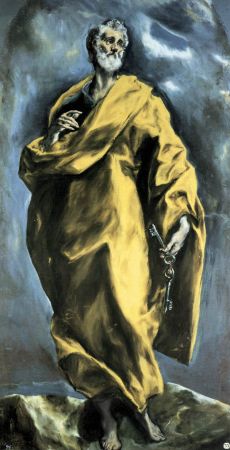
Peter has reached a maturity in his life that leads him to reflect on his own past and conclude that love is

he has the keys

indeed the key that anyone who is called a Christian must employ on a daily basis. When he states that love covers sin, he is not condoning sin or trying to get people to cover it up. What he is doing is telling us that love acts like a shock absorber which cushions and smoothes out the bumps and irritations caused by other believers. Here I think he is reflecting on his own actions when he denied Christ when he was arrested for sedition. However, having committed the sin and being cognisant of his act he went back to what he knew best, fishing. In his flesh Christ must have been very disappointed with Peter, however as the lord of all spirits and the perfect example of love, the risen Christ calls Peter from his ‘feeling sorry for myself’ state and restores him (St John 21:15-17).

‘Peter feed my lambs’! ‘Peter feed my sheep’ and again ‘Peter feed my sheep’. Jesus asked Peter the question do you love me, three times.  And Peter felt really bad because he knew what he had done.

However, the love that Jesus wants us to develop is one that stretches and covers the wrong we have done. It does not condone it, but it covers it once we are able to confess it and get it out into the open. Peter had to do the following: confess with his mouth, yes I love you lord. Then he had to allow the pain of the past to rise to the surface so that Jesus could heal him; and finally he had to receive restoration so that he could get back on track following Jesus.

So for us as Christians, that is, followers of Christ, let us be reminded to pray fervently; but let us remember that contrary to what some folks say, prayer is not the key! For me, prayer is the doorway that leads to where God wants to take us, but LOVE is the key that opens up that door! There are many religions that pray so much more than Christians but do not have the love of Jesus in their hearts!!!

Today allow the love of God through Christ to cover the messed up areas of your life and receive the restoration that the Holy Spirit brings. So ask the Jesus to baptise you in and with the Holy Spirit.. Ask and you will receive!

Read St John 21 as say like Peter I will go wherever you lead me, Jesus.

Posted by: pastorapbell | November 16, 2010

as we live in the ‘flesh’ by God’s grace

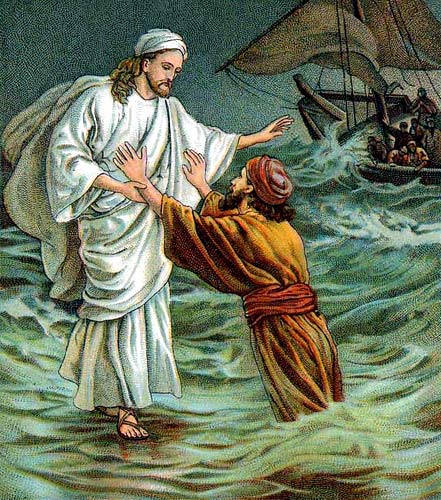
When Peter exhorts us not to live in the flesh perhaps he knows what he is talking about. He encourages his hearers not to live by human desires but to live by the will of God.  Ask yourself the question.  Is this guy for real? Isn’t this the same guy who lied when his teacher and friend was arrested (Luke 22:54-62), not once, not twice but three times!  Isn’t this the same Peter who could not control his temper and cut off the temple guard’s ear? (Luke 22:50).  Yet this same Peter walked on water! (Matt 14:29), saw over 5000 people being fed with a few loaves and a couple fishes, and saw many more miracles.

good try Peter!

So I guess the Peter could have a few things he can pass onto us. So how do we live by the will of God, Peter? Well, he would answer, firstly we need to find out what the will of God is. My friend Paul tells us that the will of God is to be filled with the Holy Spirit and not to be drunk with wine (Eph 5:17ff). Secondly we need to refrain from doing the things we did when we did not know Christ. Here are a few things I listed earlier: licentiousness (this is unrestraint in the way we act and operate in many areas of our lives), passions, drunkenness, revels, carousing and lawless idolatry. And finally we have to say NO when our friends invite us to partake in these activities we used to do before we made Christ lord of our lives! (4:4).  

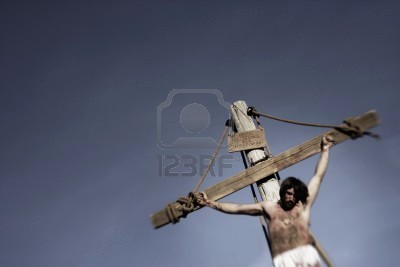
When Peter invites us to suffer for the sake of the gospel if needs be, he is Not telling us to develop a theology of suffering, but that suffering is part and parcel of the package. He was killed for preaching the gospel and by all accountsn was crucified upside down!

As a Christian, people will despise you, they will ‘rip you off’, they will abuse and shun you, but as Peter tells us, EVERYONE will have to stand before God and give an account of how they lived in the ‘flesh’.

So today exist in the flesh but live in the Spirit and read 1Peter 4 and obey the gospel (the good news about Jesus).

Posted by: pastorapbell | November 15, 2010

as we listen to Peter as he tells us where real authority lies

Having used the analogy of the master and slave and the wife and husband to explain to us the nature of authority, Peter now goes on to tell us where real authority lies. The slave is encouraged to accept his lot, usually of unjust treatment, as Christ did. Not accepting the position you find yourself in leaves one open to the root of bitterness which will produce the fruits of bitterness such as anger, malice and insincerity that

this is real authority

Peter mentions in Chapter 2:1.  He goes on to state that acting like a slave, Christ endured the suffering, the abuse and the shame so that he could condemn all these vices in the flesh and set us free. In the analogy of the wife and husband, he describes the wife as the weaker vessel. This in no way suggest that the women are emotionally weaker that men. He rightly suggests that in general women are physically weaker that men, but does not suggest that men should use their physical strength to subjugate women. Generally women tend to be emotionally stronger than men and are more intuitive. 

Peter now concludes his argument and reiterates the spiritual dimension that we should aspire to.

Firstly he quotes the Psalmist who reminds us that for us to receive blessings from the Lord, we should seek peace and pursue it (3:10), keep our tongues from speaking evil and our lips from deceit (lies).  It is better to suffer for doing good rather than suffer for doing bad.

Secondly we can then make a defense (put up an argument) of the hope that is in us to anyone (v.15) because Christ is now our example. Finally we ought to keep our consciences clear as this determines how we relate to God (v.16). (Our spirit man is made up of our consciences, our intuition and our fellowship/communion with God).

So real authority lies in Christ and being in Christ allows us to share that authority. Because Jesus is 100% spirit, when he suffered and died physically, he was still active spiritually, preaching to those spirits who were imprisoned by Satan. And upon his ascension to heaven, God placed everything, both spiritual and temporal under him, and as we remain in him we can exercise his authority in love as someone who has been set free.

Read again 1Peter 3:17-22 and appeal to God for a good conscience!

Posted by: pastorapbell | November 14, 2010

as we understand the nature of real authority

Peter writes that wives must accept the authority of their husbands and by doing this even if the husbands are not fully persuaded they may come to faith in Jesus. This follows on from his exhortation to act as slaves in obedience to God. Can we as 21st century people accept that women should be subject men? Can we accept women should be subject to a particular way of dressing as suggested by Peter and that they should not plait their hair or wear jewellery or fine clothes? Are women the weaker vessel as he suggest?

In Peter’s day society was totally Andro-centric, that is, everything was controlled and moderated by men. Men went out to work whilst the women stayed at home and raised and educated the children. Peter is writing from his context and is trying to tell his hearers that spiritual authority flows from the head downwards. He uses the analogy of Sarah obeying Abraham as a model for Christian living. We know that Sarah was not completely obedient and instructed Abraham to have a surrogate child with Hagar, who she later despised.

So although we read Peter, we need to be careful and do not read into what he is not saying. He is not saying that women must stick to a particular dress code where they completely cover up like our Muslim sisters do. What he is saying is this: just like Sarah obeyed Abraham and called him lord, and just as slaves obeyed their masters and called them lord, so we who are followers of Christ must be obedient to him if we call him lord. Peter is not being prescriptive in how we should dress, he speaks from his context that we should be moderate in our dressing and in our actions. We may look the part but internally we are totally corrupt (see Matt 23). Hence he tells us to get rid of the vices that tarnishes our character and put on the virtues that bring us closer to God. Paul puts is more plainly in Colossians 3:8-15.

So today dress moderately, but ensure that you heart and your motives are pure so that God can use you by his Spirit.

Read 1Peter 3:1-7 and try to be a good husband or wife.

Peter tells us to in his writing (Ch. 2) that we should suffer for the gospel as needs be and use Christ as our example. He also states that we should accept the positions of slave and master.  Obviously in the time of Peter slavery was part of the culture [culture can be defines as the way we do things here and now], and none of the gospel writer commented on the evil of slavery. They use the analogy of the slave as someone who obediently obeys their master to fulfil his purposes. So Jesus is referred as a slave because he suffered without retaliation to restore humanity back to God.

In our time however, the term slave has taken on a completely different meaning. The Trans-Atlantic slave trade redefined the levels of inhumanity that was inflicted by one human being on another for financial gain. Slavery, whether it is human trafficking or women being sold as sex slaves, is wrong.  If we take the writings of our brothers Peter and Paul out of context, we can fall into the trap of sanctioning slavery as the founding fathers of America and the Boers of Southern Africa did.  Peter encourages us to love one another, develop a tender heart and live in unity (3:8). We are not to repay evil for evil but to seek peace and to pursue it (3:11 taken from Psa. 19).

Peter spoke out of his context where slavery was an everyday occurrence; we can speak from our context where we should respect the dignity of each person irrespective of their ethnicity or belief system. Each individual must choose to become a ‘slave’ for Christ or to follow their own devices.

The harsh reality is this. If we fail to take into consideration the context when we use terms such as slavery, we can forget the underlying brutality that this terms represent and boldly declare that ‘I am a slave for Christ’. You may have the choice to call yourself that, but a true slave had no choice. A true slave had no means of self determination. No choice of where to sleep, what to eat or who to marry. During the period 1500 – 1800 slaves in the Caribbean were forbidden to marry. Hence illegitimacy is still rife among our community.

Today let us be obedient to the Spirit, but be careful how we use terms we read from scripture. As we contextualise our readings the Holy Spirit will guide us into all truth.

Read 1Peter3

Posted by: pastorapbell | November 12, 2010

as we look at suffering from a different perspective

Although Peter commends that the followers of Jesus should accept suffering as we travel along the path to becoming fully human, he is not recommending that we develop a theology of suffering, that is, we major of the theme of suffering to the point where this is all we talk about. Many people of the past fell into this trap and indeed there are still many people today who fall into the trap of focussing of one particular area to the exclusion of many others. Examples of this are those who do penance by beating themselves until they cut the skin thinking that this will appease God. Others focus on the fact that God want us to be prosperous and spend their time accumulating wealth. Still other spend their time promoting one gender above the other by taking Paul’s writings out of context and subjugating women and disregarding their benefit to the kingdom as Jesus and Paul himself did (see 1cor 14:33, 1Tim 2:12 & St john 8:1-11 for such examples).

learn from our elders

What Peter tells us in this chapter is that we should be examples to those who do not know the true and living God and have not experienced his power. So when they revile us do not retaliate, but reflect the love of Christ to them. Listen to Peter for a few moments; “For it is God’s will that by doing good you should silence the ignorant talk of foolish people. Live as free people, but do not use your freedom as a cover-up for evil; live as God’s slaves. Show proper respect to everyone, love the family of believers (the church), fear God, honour the emperor (Political leaders) (1Peter 2:15-17 NIV).

So we can be rich or poor, servants or masters, men or women, but whatever state we find ourselves in or whatever gender we are let us live to reflect God’s glory. Use your riches or your poverty to glorify God. And let him change our status to show us off to the world.

Have a read of Romans 8:31-38 and see how Paul puts it!

« Newer Posts - Older Posts »

Categories