Posted by: pastorapbell | December 2, 2010

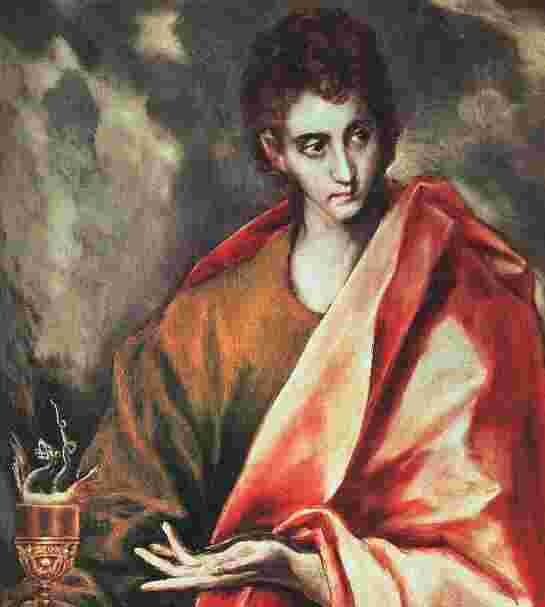
as we are introduced to St John the divine

John was born in Galilee probably between A.D. 10 and 15. He is the son of Zebedee and Salome. His father was a fisherman, a trade which John was plying when he met and joined Jesus (Mark 5:37). His mother joined the women who served the followers of Jesus (Mark 15:40-41; 16:1). His brother James also followed Jesus. Jesus nicknamed both brothers Boanerges, meaning in Aramaic “sons of thunder” (Mark 3:17), a reference to their rather fiery attitude to Jesus. It was their mother who asked Jesus if they could have the best seats in heaven (Matthew 20:10).

John and James, together with Peter, are presented throughout the Gospels as the most closely associated with Jesus of all his followers. John, with Peter and James, witnesses Jesus’ supernatural communication with Moses and Elijah on Mt. Tabor; he is present in the Garden of Gethsemane the night before Jesus dies. When all others leave the dying Jesus, John remains, and Jesus entrusts his mother, Mary, to John’s care. After the death of Jesus, John is presented as one of the leaders in Jerusalem as the followers of Jesus. In the Acts, John testifies to Jesus with Peter and James. He goes to Samaria with Peter to confirm new converts (Acts 8:14, 25). When Paul is converted, he submits his orthodoxy to John, Peter, and James (Galatians 2:1-10).

It is not known how John ended his life. Some traditions claim that he was martyred. Others claim he died at a ripe old age. Tradition from the 2d century claimed that John died and was buried at Ephesus. Today there is a house in Ephesus, Turkey which is preserved as the last place Mary and John lived before he was exiled to the isle of Patmos for preaching the gospel. John started following Jesus as a young boy and lived to see the glory of God, miracles signs and wonders after which he writes to his hearers this: love is from God because God is love. Therefore if you have not love you have not God. Right on John, we will hear some more from you tomorrow.

Read Mark 3

In many ways as study of the life of Peter gives us an insight into the complexities that confronts fallen humanity. We are enculturated and imbibed into a mindset that says: the way I see and do things is right and everyone else is wrong. We also buy into the notion that humanity is split into different races, and that all these races are different.

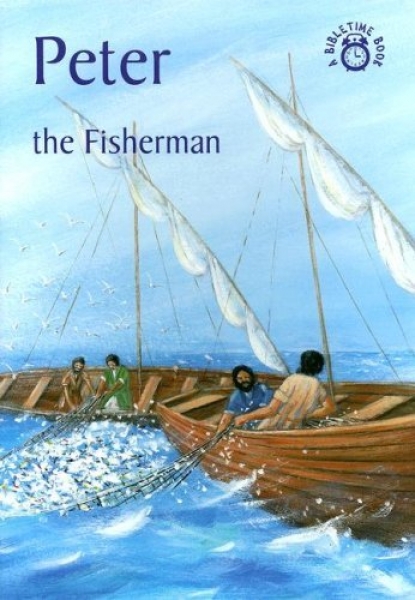
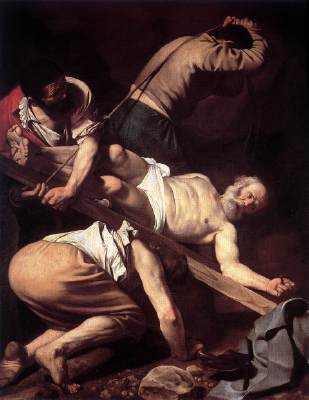
Frpm fisherman to...

When the penny drops, firstly we will recognise that our ways of looking at the world is entirely subjective and our views and perspective is dependent on where we are looking from. Secondly, we will come to the conclusion that there is only one human race and the purpose of Jesus dying on the cross is to reconcile Adam’s fallen race to God the creator, i.e. to make us spiritual again. So, all ethnic groups have the same basic needs and are all part of the one human race. We all need to be loved, to belong and to be significant. If these basic needs are not me then we will look for them in rather strange places.

These needs were exemplified by Peter and when he felt that they were not being met

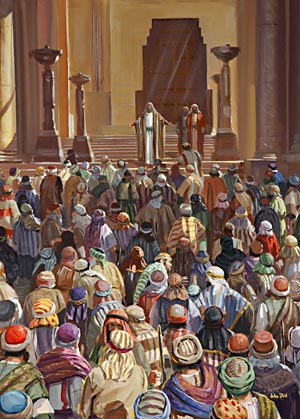
Peter the Preacher

 he acted irrationally. He knew he should not lie, but he did. He knew he should have been loyal to Jesus at his time of need but he wasn’t and so on. However, after the penny had finally fallen and with the help of the Holy Spirit Peter was consumed with holy boldness and an overdose of humility.

Today when the penny finally drops for us, let us be consumed with boldness to proclaim with humility the fullness that Jesus offers and let us live justly before homo-erectus so that we can persuade them to be reconciled to God the father.

Posted by: pastorapbell | November 30, 2010

as we remove our cultural lenses to view new vistas!

The way Peter lived prior to meeting Jesus is typical for many of us. We go about our business and are concerned only for our wellbeing and for the wellbeing of our immediate families. Peter’s mindset was fixed in the way he saw things, which in turn dictated how he operated. He wore his cultural lenses at all times and accepted the status quo. That all changed when he was introduced to Jesus by his younger brother Andrew. After Andrew brought Peter to Jesus he is seldom mentioned in the scriptures, but he was there working away in the background, bringing more and more people into contact with Jesus.

Like Peter, many people go through life without taking off their cultural lenses and therefore fail to participate in the rich cultural diversity that God has afforded us. Once we are exposed to ‘others’ and their ways of doing things, our attitudes and tolerance levels can be revolutionised.

Jesus’ mission was to bring good news to the oppressed, to bind up the broken hearted, to proclaim liberty to those in captivity and release to those in prison (Isaiah 61:1-2). He gave sight to the blind, hearing to the deaf and healed those who had physical, emotional and spiritual ailments.

However, the greatest healing an individual can undergo is that to the human spirit. This only occurs when we open up to the Spirit of Jesus and allow him to remove our cultural masks so that he can reveal to us what it is to be truly human. Peter experienced this and was able to embrace the very people who were oppressing his nation for many years (Acts 10) to bring salvation to them.

Today can we be like Peter and allow the Spirit of the sovereign Lord to open up our blinded eyes, heal our broken hearts and release us from selfishness and bigotry? So be like Peter and let Jesus turn your world upside down.

Read Mark 14:26-31 & 16:6-8 see how Peter went from a denier to a pillar.

As we conclude the letters that Peter wrote we must stand back and reflect on the transformation that has occurred in his life over time. When Peter met Jesus in Capernaum he was busy working hard in his family business making a life for his family. Like many of us, his priorities were his business, his immediate family and his faith was there somewhere in the background. He knew the history of the Jewish people and had heard that a Messiah was scheduled to come and deliver them from their enemies as some point. The society he lived in was male dominated and the Jews regarded all Gentiles as unclean. Over time and with the help of Jesus, Peter’s attitude was transformed. Not only was he able to accept that non-Jews could receive the promised Holy Spirit, but that all of humanity was subject to suffer because of the fall and the only atonement for sin was the sacrifice of Jesus on the cross.

his life was alos turned upside down!

Peter’s world and his thinking were turned upside-down. His understanding was completely revolutionised. He has seen things that would make his hearers jaw drop. He had walked on water, seen thousands of people fed with a few fish and some baps. He had followed Jesus in rebuking the spirit that had kept a man lame for years (Acts 3). He had seen the deaf hear, the blind see and the dumb speak. And finally he had his cultural norms completely transformed. Culture can be defined as ‘how we do things here’. 

Peter knew that God was in control of everything. He knew that angels and demons were real. He was delivered by an angel from prison for preaching the gospel (Acts 12). Now at the end of his life he leaves these two books to encourage us with these words: ‘since all these things are to be dissolved in this way, what sort of person ought you to be in leading lives of holiness and godliness’ (11 Peter 3:11).  We ought to know that everything must come to an end, therefore leave a legacy of lives we’ve impacted not monuments for people to look at.

Today let us allow the Holy Spirit of God to transform our thinking so that we can become the people God called us to be; people of Faith and not fear.

Read John 13

Posted by: pastorapbell | November 27, 2010

as we ask God for wisdom

experience teaches wisdom

Although Peter was not a prolific writer or an academic, when he spoke it came straight from the heart. He was not one for mincing his words, or one to try to work out complex theological issues. What he knew he knew and no one could take his experience from him. In the final verses of his second letter, he reminds his readers of the need to contextualise their readings. Presumably because some people had taken his colleague Paul’s letters out of context and used it not for the building up of the church but for its demise. Examples of this are the role of women in the church and how they should dress.  Whilst writing to Timothy, Paul writes that women should be silent in the church and were not permitted to teach, 1 Tim 2:11-12. What Peter is saying in his final exhortation is this: if this is taken out of context then people will apply it in their context to their ruin. In context then, Paul is addressing the wives of rich patrons who were interrupting the meeting at Ephesus by asking questions out of turn. And Timothy like many of us church leaders was very accommodating. So the apostle Paul, as Timothy’s mentor, write to correct this position and instructs him to tell the women who are causing confusion to learn from their husbands at home so that they do not disturb the service when the church met. Sadly, there are people today who still subjugate their women and lose the immense contribution they bring to the ministry. Peter tells us that when people reads and apply Paul’s letters out of context, they do so to their own destruction. Since Paul’s ministry was supported by wealthy women it would be foolish to think that he was sidelining women by promoting male domination. In fact he cited a woman apostle in his list of commendations to the Romans chapter 16:7.

So today, as we ask God for wisdom, let us listen to Peter and put what we read in context. Do some background research before jumping to any conclusions. For as Peter encourages us, let us not lose our own stability but rather grow in grace and in the knowledge of our Lord and Saviour Jesus Christ.

Read 11 Peter 3:14-18 & 1Timothy 2

Posted by: pastorapbell | November 26, 2010

as we reflect on God’s economics and his mathematics

God's system is superior to ours!

In the next section of his final chapter Peter quotes from Ezekiel 4:6 and reminds us that the Lord is outside our time so to speculate when he will return according to our understanding of timing is futile. He reminds us that one day with the Lord is as a thousand years and a thousand years is as one day. For us to contemplate the Lord’s timing is like looking at a doughnut from a vertical perspective and only seeing the outline of the lines. It is not until we change our perspective to the horizontal plane that we notice that the doughnut is round. The whole essence of Peter’s exhortation is that God is a God who keeps his promises. And although it may seem to take a long time for the promises to come through, they will come to pass at the appropriate time. Whilst reminding us of this it seems to me that Peter is reflecting on the first advent of Jesus. They all knew he was promised but misunderstood the nature of his coming and the manner in which God operates. So when the infant was born in Jerusalem as promised, born of a virgin as promised and heralded by the stars in the constellation of the skies, the very people who knew that a Messiah was coming missed the event. Later on in his life the people who studied the scriptures on a daily basis castigated Jesus because he healed and delivered people on their holy days!

Peter reminds us that the day of the Lord will come like a thief in the night (v.10) when those who are not prepared will be destroyed whilst those who have been faithful, whether they are dead or alive, will be with the Lord.

These are sobering word for all of us who call ourselves Christians. Jesus is coming back and we should live as though his coming is tomorrow. So what does the Lord require of you? It is this: To act justly and to love mercy and to walk humbly with your God (Micah 6:8b). 

Today read 2 Peter 3:8-19 and Micah 6:6-8.

Posted by: pastorapbell | November 25, 2010

as we look back to advance forward

In the last chapter of his letter, Peter advises his hearers to remember to use the experiences of the prophets of the past to judge those who come in the name of the Lord. Essentially, how do we discern those who come into the fellowship to cause confusion against those who have come to help establish the building up of the kingdom?

beware of the ploters!!!

What we glean from Peter’s exhortation is that although times change, people’s attitudes and motives remain the same. So when we are judging an individual, do not just listen to what they say or what they say they have done, but look at their track record. We must be spiritual but we must also have our eyes wide open. Our enemy is very bold and blatant and will sit right under our nose trying to mock and ridicule us as we do what God has called us to do.  So if we were to look back at Judas, we notice that he was always there in the mix, listening to the plans, the sermons and the teachings of Jesus. However his motivation for following Jesus was skewed as he was on a different agenda. And as we remember from my previous writings, all double agent eventually gets killed.

So Peter’s motivation in writing to his hearers is to remind them that as the time for Jesus’ return gets closer the enemies of his church will try to cause maximum confusion by distracting us from our primary purpose. As we read the words of the apostles, let us ask the Holy Spirit to teach us and guide us into all truth as we remember that there is no new thing under the sun.

Read 2 Peter 3:1-7.

Posted by: pastorapbell | November 24, 2010

as we out those operating as double agents

Peter reminds his hearers in 11Peter 2 that he had seen it and done it all before. He remembers vividly when the disciples were empowered by the Holy Spirit and when moved by the Spirit he spoke to Jews from the Diaspora who came to faith in their droves (Acts 2:14). He was also aware that there are those who, having come to faith, set their hearts on things rather than on the expansion of God’s kingdom. In particular there was a couple who were part of the prayer meeting when the place where they met shook whilst they were praying (Acts 4:31). They had bought into the vision of the church to contribute to its development by making a sacrificial donation. They sold a piece of land that they had and decided to give the money as a donation to the church.  However, when the transaction was complete they changed their mind and decided that they would keep some of it back, probably to go on the luxury holiday they had always wanted to go on, probably! They then brought the difference to Peter and the rest of the apostles. But Peter spoke out against this deception and rebuked them. Firstly the man had a heart attack and died immediately followed by his wife three hours later (Acts 5:1-10).  

doulbe agents are always in trouble

When Peter is speaking about those who taste of the goodness of the Lord and withdraw their hands, he knows exactly what the consequences are likely to be. So the language he uses is to encourage those who have made a commitment to follow Jesus. For me his is clearly saying: Don’t turn back. If you make a mistake, repent so that you are not cast into outer darkness. Do not be bold and wilful! Do not slander those who are following Christ! Don’t be in an unholy relationship and justify it!  God is a forgiving God, but there is a point in time when He will draw the line and everything will come to an end. 

So today Peter would say to us. If you make commitment, follow it through. If you belong to a fellowship, this is where your tithe (10% of your earned income) belongs. If you love God, love his children also. Read Acts chapters 2.3 &4 and ask God for wisdom in all your dealings.

Posted by: pastorapbell | November 23, 2010

as we recognise those who despise authority and fail to cross over!

In his second chapter (11Peter), Peter tells us that there are those people who masquerade as Christians but in fact are intent on causing those who have committed their lives to the service of Jesus to fall back. He

allow the Lord to take you across!

uses the story of Lot and his wife to illustrate the point (2:6-10). Although Lot was a righteous man, he was surrounded by lawlessness and try as he may he could not escape the stench of the sin on his doorstep or the effect it would have on his family. Peter uses strong language to describe the people who defy God; they were like irrational animals, creatures of instinct, they were full of adultery with insatiable appetites, they listened to false prophets who use bombastic nonsense. These are the people who will lead the follower of Jesus back into bondage. And like Lot’s wife we can be drawn to look and admire what they are doing and loose our way in an instant.

Peter in this hard hitting passage sets out his case. We who have been called out of sin should not venture there again.  Since the latter state of someone who has made a declaration that they will follow Jesus for the rest of their lives and then fall back into doing the wrong things, will be worse that the initial state when they had made no commitment. 

We are encouraged therefore that once we have made a commitment we should stick to it. Even though the road will be rough we have to trust God to lead us out and not look back to what we used to do. Never justify a wrong action. The wrong thought becomes a habit and the habit becomes an action, which becomes a lifestyle which will lead you far away from God.

So today read the word and try every spirit (or individual) who tells you a new way of doing things. Trust the Lord that he will speak to you by his Holy Spirit and lead you into all truth. Do not be like the pig who after being washed returns to the mud or the dog to his own vomit! – Peter A.D. 60.

Posted by: pastorapbell | November 22, 2010

as we develop a spirit of discernment

One of the most important tools that Peter encourages his hearers to develop is discernment. So what is discernment ad how do we use it? To discern is to make a judgement based on the information presented to you. As we develop this ability to make a judgement between what is good and what is bad, we are able to know those who are real and for building up the work of God and those who are false and who try to halt the work of God. It is to these people that Peter directs us. He reminds us that in the old days there were false prophets who prophesied for money and told people what they wanted to hear. Whilst the ancient Israelites listened to them, they were carried away into captivity and endured slavery for over 70 years in Babylon.

We are reminded that hell is a reality for those who set out to deceive, and just as the false prophets of old deceived the people of God, so false teachers today will try to deceive the followers of Christ. We are encouraged to understand the operation of those prophets of old so that we are aware of them now. What Peter is telling us is this: time period may change, the personnel and the tactics may change, even the outcome may appear different but it is the same spirit of rebellion that is operating among these people. They get into position of influence and try to effect confusion and thereby disrupt what God has ordained.

Having the spirit of discernment allows the true believer to identify what is false, mitigate against it and bring restoration to the vessel that was used to facilitate that spirit. Today, as we learn to discern, ask the Holy Spirit to lead you into a true understanding of what he is saying about Jesus and not what others are saying tacked onto their own fetish.

Read 2Peter 2.

« Newer Posts - Older Posts »

Categories