Posted by: pastorapbell | June 11, 2010

As we wait with expectancy

Wait for the LORD and keep his way. He will exalt you to inherit the land; when the wicked are cut off, you will see it (Psalm 37:34 NIV).
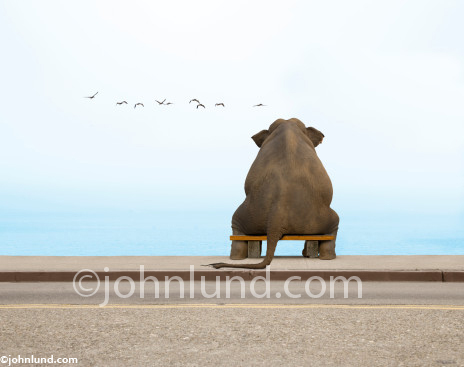
The act of call and response or prayer and petition dictates that the caller factors in a delay time in their process. This delay time is crucial as it is in this time that frustration can ensue and decisions can be made in haste. All throughout their writings the Psalmists encourages their readers to learn the art of waiting.


Psalm 27:14, be strong and courageous in your waiting; Psalm 40:1 wait patiently for the Lord and Psalm 37:34, keep to his way (NRSV) so that he may act.

I refer to waiting as an art because it is during the waiting time that character is developed. Like the artist who develops a beautiful picture with every stroke of the brush, so we are developed as we learn to wait for God to finish painting our portraits. It is during this time that we are sometimes marred.

Consider Sarah, Abraham’s wife and the subsequent strife between Isaac’s and Ishmael’s descendants in Genesis 16. The failure to wait and keep to God’s ways can have massive and serious impact on future generations. The inheritance of the land mentioned by the Psalmist has been sorted by Jesus and moved from the little strip by the Middle East to encompass the whole earth.

The word to live by today is wait. How long we have to wait for is dependant of Him and Him alone. For Joseph is was 20 years, for the African Diaspora is was 400 years, for you ‘?’ however He know what He is doing!

Whilst you are waiting read Psalm 146
Posted by: pastorapbell | June 10, 2010

As we see without our eyes!

When the servant of the man of God got up and went out early the next morning, an army with horses and chariots had surrounded the city. “Oh, my lord, what shall we do?” the servant asked.

“Don’t be afraid,” the prophet answered. “Those who are with us are more than those who are with them.”

And Elisha prayed, “O LORD, open his eyes so he may see.” Then the LORD opened the servant’s eyes, and he looked and saw the hills full of horses and chariots of fire all around Elisha (2Kings 6:15-17 NIV).

The purpose of praying and reflecting on what you have prayed for is to believe and see the object of the prayer before it materializes. Our prayer is predicated on the fact that if the God we are serving did it in the past and he never changes, then he will do it again.

Today my prayer is “Lord, I want to see you even though you are invisible, I want to tell of your wondrous works to the next generation of believers and revel in your merciful steadfast love throughout eternity.”

Grant me the faith to believe what my mouth has declared, and the eyes to see without looking!

Read Psalm 145

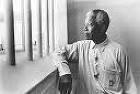
Our deepest fear is not that we are inadequate. Our deepest fear is that we are powerful beyond measure. It is our light, not our darkness that most frightens us. We ask ourselves, who am I to be brilliant, gorgeous, talented, fabulous? Actually, who are you not to be? You are a child of God… Nelson Mandela 1994.

Prayer is a time to pour out from yourself the things that irks you. It is also a time to revel in the greatness of your father, glorify him! Who would not boast about the exploits and wondrous achievement of their natural father? The problems we face are compounded by our lack of faith in what God has said or ignorance of his promises to us.

When we pray and take time to reflect we must stop to hear what God says about the matter.  Usually he has already made pronouncement about it or guided someone through what you are facing. Remember there is no new thing under the sun (Solomon ~1000BC).

Nelson Mandela is seen as one of the greatest statesmen of the 20th Century. However, he could have acted like other persecuted leaders and rendered evil for evil. Instead he chose to forgive and allow God to deal with the perpetrators of evil and hate. He emerged from prison in February 1991 and by 1994 he was president of South Africa.

If you, O LORD, kept a record of sins, O Lord, who could stand?

Today when you pray, believe God and believe what he says about you!

Read Psalm 130 v 3

Have mercy on me, O God…. Psalm 51 opening stanza

Restoration and reconnections are terms that dictates that there was a falling away, being disconnected or suffering from a temporary loss of connectivity. The ‘re’ at the beginning of word suggests that the thing has been done before or the position occupied previously.

The cry for mercy suggests that the crier had finally realised that his course of action was wrong and there was a desperate need for change. “Have mercy on me, o Lord!” This is a cry for help, for clemency, for compassion that I don’t deserve. It is not a plea bargaining stance; it is not a ‘I want this situation changed now!’ request. It is a heartfelt request to someone who has the power to change a situation, but who may not.

This should be at the heart of a reflective practitioner, who thinks and meditates about their relationship with a loving, forgiving, merciful all powerful father.

Although Yahweh is all powerful and all mighty; Notice that the ‘all’ suggests that the divine is supremely strong and nothing is impossible for him. However, this fact is lost to the son or daughter until their senses have come back to them. The loss of power, the un-connectedness had the effect of thawing out the frigidity of pride and folly of arrogance.

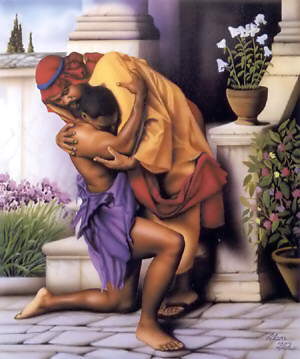
So the son returned fell on his knees and exclaimed that he no longer deserved to be called a son. The king whose heart was a reflection of God’s heart, asked to be scoured like a burned Dutch pot. And we in the 21st century, are we too busy to sit and reflect, to cry out to him and to be reconnected?

He is still ‘The I am! Not The I was or the will be, although He is that as well, but the ‘I am’. The ever present father and friend!

Meditate on Psalm 51, Luke 15:11-32

From our reflections on the story of the prodigal son and his brother, we can surmise that both brothers and the father were people of prayer. The father prayed that his sons would commit their lives to the lord and live lives that brought glory to his name, whilst the sons prayed that their father would leave them a good inheritance. However, not all our prayers are answered. If our hearts are not right, that is, our ways of thinking does not coalesce with our actions, then our prayers will be of non-effect.

Praying without reflection is like driving a car with an internal combustion engine without checking it for oil and water periodically. Prayer becomes the focus rather than the relationship with our fellow individuals. This is the position of many religions, they pray but there are little results, because their prayers are repetitive and ritualistic.

A ritual becomes a religious act which is repeated over and over again. Prayer that is reflective is fresh, spontaneous and relevant to the current situation.

Like the elder son, we can become vain and bitter and call God’s unmerited favour unjust because he pardons the vilest offender.

So as our hearts are purified by the power of God’s word and by the favour he bestows, let us reflect on the fact that answered prayers are preceded by our change of heart, [repentance] and is underpinned and sustain constant action/reflection.

Read Proverbs 3 and don’t be wise in your own eyes

Posted by: pastorapbell | June 6, 2010

As we reflect on sensible actions

From the parable of the lost son there is period of time that it takes the younger son to reflect on his past and make a choice about his future. After all his money had finished and all his friends had gone what was he left with? Who was mentoring him? And where would he go now?

The fact that he could reflect on these questions means for me that he had been given the ability to think. When we have reached that point in our lives, a point of departure from the glitter and the ‘bling’ that has dazzled us for so long, when do we take time to stop, reflect then act? It is the reflection that makes the action possible.

Deep down we know that our father knows best. If we do not have a biological father then there are role male models and surrogate fathers who would be more than happy to guide us.

Like the younger son, who at the time of leaving his comfortable surroundings, knew best, after the reality of life has taken its effect, he now knows that if the truth be told he knows very little indeed. This situation is analogous to the emancipation of the salves after the abolition of slavery in 1834 in the Caribbean. They were free, they had the yard where they lived but what else did they really have? If they could not read or write they were still tied to their masters who had been compensated financially by GB PLC.

We as sons in the Diaspora need to reflect on the dichotomy of still being defined by a system that is still hostile to us and jettison the mentality that the older son exhibits. That is, if younger son can rise up from the trough of pig swill to take his place at the table, then let us support him and encourage him to continue to be upwardly mobile so that he will once again feel the fathers embrace. Rather than despise him and show him ‘bad face’. If he can do it so can all of us!

Read Luke 15:11-32 through the eyes of your experience as a Diasporan person

Posted by: pastorapbell | June 5, 2010

As we reflect on the art of reflection

The elder son’s actions shows how the beloved can be depressed because he thinks he should receive greater love because he has done all the right things (i.e., that he has met these qualifications). The father alone understands how to love and forgive and is able to do so and be happy.

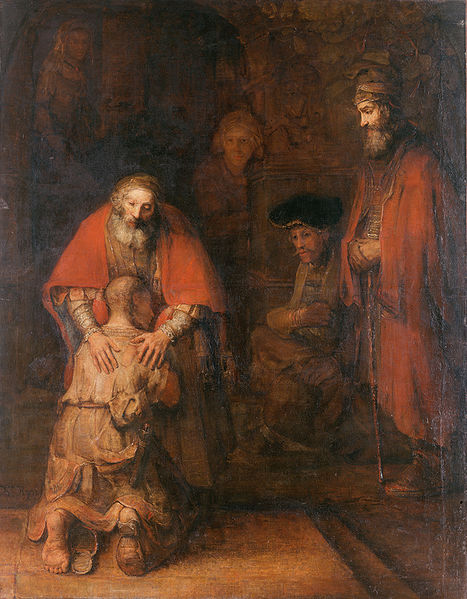
The reflective practitioner is someone who thinks about what they are doing and then consider how they could have done it better. It is assumed that one who becomes a practitioner usually knows more than they are able to say. Take for example Henri Nouwen’s writing and reflection on the story of the return of the prodigal son as depicted by the painting of Rembrandt. The picture shows the younger son kneeling and we assume that he is asking the father for forgiveness, having come to his senses after a time of riotous and wanton living. He is reflecting on his past mistakes as his father stretches out his hand in affirmation that he is still welcomed back to his rightful place. The assumed reflection by the younger son is juxtaposed against that of the older son who looks on with a sense of “Father how could you!” and as Jesus stated in the short story in Luke 15:11-32, a sense of disgust, rage and anger must have welled up in the older son’s spirit as the story unfolded.

The younger had wandered, prayed for repentance and received it unconditionally whilst the older son who done all the right things was gob-smacked at what he was witnessing.

Without the art of reflection we too can become like the older son in the story. We have been faithfully attending our church, doing what we know to be right without realising that God answers the prayers of those who cry out from the gutter from a position of desperation. The art of reflection has little capital until it is put into practice and become part of what you do. That is, my reflection must be followed up by action or else it becomes just verbalism. Like the older son who represents the Pharisees of Jesus’ day, we can reflect and criticise but if we do nothing then our spirituality and prayer life becomes vain and a waste of time.

Today pray and exercise your faith by doing something, then reflect and do it better next time. Action, reflection then better action is the way forward.

Read Luke 15:11-32

Posted by: pastorapbell | June 4, 2010

As we reconnect through prioritising and reflective prayer

Search me, O God, and know my heart; test me and know my anxious thoughts. See if there is any offensive way in me, and lead me in the way everlasting (Psalm 139:23-24 NIV).

There are different types of prayer which are characterised and dissected by those who want an analytical appraisal of it. For those who want to connect with the Lord Jesus Christ or those who were connected and wants to reconnect there must be a desired outcome. Too often we are too busy just to sit and think, and we get caught up in our own busy-ness. Sometimes we just need to get away from our familiar surroundings to reconnect with God. This may mean taking a day out or a week or even a month to reassess our priorities.

For me, a major turning point in my life was the death of my mother. We were very close but towards her later years our relationship tailed off. I had an urge to visit her abroad and whilst I was there she died. I did not realise the impact this had on me until I returned to work. The stress of work caused me to have a mini stroke and to reassess my priorities. I changed my lifestyle and now I do what I do in a stress-free manner. My prayer to the Lord is to be in a place where I can fulfil the purposes for which he has called me.

By reconnecting with him and changing my priorities I am able to say like the psalmist, search me o lord and see if there is wicked ways in me. If there is, show me them and help me to jettison them so that I can truly reconnect with you.

Read Psalm 139 particularly vv23&24 over and over again

Have mercy on me, O God, according to your unfailing love; according to your great compassion blot out my transgressions (Psalm 51:1).

Prayer that gets results must be predicated by a heartfelt desire for truth. When we go to our God with a truly repentant heart and in full assurance of faith (Hebrews 10:22) we are fulfilling the criteria for God to fulfil his part of the equation. For as the writer of Hebrews tells us, daily repetitive sacrifices can never completely remove sin. So the frequency of prayer although it is a good discipline, must be balanced by the condition of our hearts and must be underpinned by love.

 So regardless of the fact that you pray five or more time a day at regular intervals, if your heart is not clean, that is your actions betray the words you say to God, your prayers will go unanswered. For as the psalmist says, “if I regard iniquity in my heart then the Lord will not hear me” (Psalm 66:18 KJV). This is exactly the trap that the ancient Israelites fell into. And today many followers of Islam fall into the same trap as they would rise from prayer to kill those who have different views from them.

Prayer is a dialogue, therefore when we pray there must be a time of waiting for the person to whom the prayer is given to respond. If this person is an inanimate object or cannot respond, then the prayer is just a religious exercise. However, we know that Yahweh is a God who listens and answers prayer in ways that we can see and recognise.

Today spend time listening to him for he will answer; and as the writer of Hebrews says: “without faith it is impossible to please him: for he that cometh to God must believe that he is, and that he is a rewarder of them that diligently seek him.”(Heb 11:6 KJV).

Read Hebrews 10 &11.

Well then, what shall I do? I will pray in the spirit, and I will also pray in words I understand. I will sing in the spirit, and I will also sing in words I understand (1Corinthians 14:15 NLT).

For this month of June I will be focussing on the spiritual discipline of prayer. Each day I will outline my take on some of the aspects of living a prayerful reflective lifestyle that brings results. However I would like the life that I am advocating to be one that sees prayer not so much as a tool for getting what we want but as a means of communicating with the father to know what he wants for us to do in these times in which we live. The premise of my reflection will be a follow on from the previous month’s line of argument that the most important aspect of our faith is the ability to appropriate and use truth to bring about changes in our lives.

We will start off with the fact that the dichotomy of double consciousness can now be superseded by the fact that we can live in an evil world and shine like bright starts (Philippians 2:15) and still be true to ourselves and to Jesus Christ our lord and saviour.

So for today let us start the process like the psalmist David and speak to tell ourselves; You [God], require truth in the inward parts [my psyche or subconscious being]  therefore teach me wisdom in my secret heart [my most private memories]. This prayer starts with a cry for mercy and a plea for the Holy God to cover his iniquity with God’s abundant mercy and love. He then moves on to confess his sin and seek the cleansing that only comes from the washing of the word [the Blood of Jesus] so that truth may rise to the front of his life like cream on top of a warm cappuccino.

This prayer is real and revealing. It is not just a repetition of words or a ritual that is carried out with religious precision. It is a plea for help from a man who loves God but has allowed the position that God placed him in to become more important than his relationship with God. The spirit of pride, which is common among us, gets the better of him and he falls into the sin of believing that he can do it all by himself.  Many of us as Christians reach this place and miss what God is doing ‘Today’. If you are in that place, pray with understanding and become more reflective.

Read Psalm 51 slowly and reflectively and meditate on verse 6.

« Newer Posts - Older Posts »

Categories