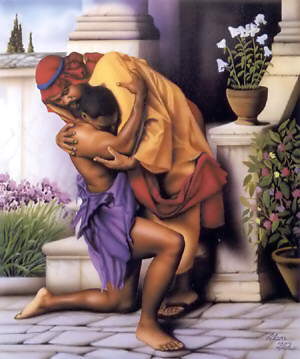
 From the parable of the lost son there is period of time that it takes the younger son to reflect on his past and make a choice about his future. After all his money had finished and all his friends had gone what was he left with? Who was mentoring him? And where would he go now?
The fact that he could reflect on these questions means for me that he had been given the ability to think. When we have reached that point in our lives, a point of departure from the glitter and the ‘bling’ that has dazzled us for so long, when do we take time to stop, reflect then act? It is the reflection that makes the action possible.
Deep down we know that our father knows best. If we do not have a biological father then there are role male models and surrogate fathers who would be more than happy to guide us.
Like the younger son, who at the time of leaving his comfortable surroundings, knew best, after the reality of life has taken its effect, he now knows that if the truth be told he knows very little indeed. This situation is analogous to the emancipation of the salves after the abolition of slavery in 1834 in the Caribbean. They were free, they had the yard where they lived but what else did they really have? If they could not read or write they were still tied to their masters who had been compensated financially by GB PLC.
We as sons in the Diaspora need to reflect on the dichotomy of still being defined by a system that is still hostile to us and jettison the mentality that the older son exhibits. That is, if younger son can rise up from the trough of pig swill to take his place at the table, then let us support him and encourage him to continue to be upwardly mobile so that he will once again feel the fathers embrace. Rather than despise him and show him ‘bad face’. If he can do it so can all of us!
Read Luke 15:11-32 through the eyes of your experience as a Diasporan person


Leave a Reply