Posted by: pastorapbell | January 5, 2013

as we prepare our tools and focus our minds to build

As we desire to travel on the road towards restoration, firstly we must know who we are and whose we are. Nehemiah knew he was the man to bring oldmanconsolation to his people and the bring revelation about what God intended to do at this juncture of his life. He also knew he had a heritage, which was conditional. His people, including his father had disobeyed the commandments of God and suffered the consequences of this. Unbelievers desecrated their place of worship and the walls to the city God gave to David as a place where his name should be revered forever, lay in ruins. However, Nehemiah had a ‘cushy’ life style. He was in a good job earning a good salary, but nonetheless was concerned about the state of his beloved city, Jerusalem. To start the process of restoration then, he started where all of us should start, with repentance. He confessed his and the sins of this fore-parents and petitioned God for forgiveness (1:11). In the second clause of verse 11, as he had done in the verse 6, he asks God to incline his ears to his prayer. These were not just ordinary prayer, there were prayers seasoned with fasting and repentance. He prayed and fasted for four months, petitioning and seeking God for a way to resolve the problem.

Today, as we take the first few steps towards wholeness, let us learn to repent by asking forgiveness and forgiving anyone who has harmed us. And let us remember that unforgiveness will keep us on the treadmill of resentment; revenge will keep you under the feet of your enemies whilst forgiveness will set you free and place you above them. So prepare by sharpening your tools, for there is a great work to complete.

Read Nehemiah 1:4-11.

The process of rebuilding anything is a long laborious one that can seem very daunting. However, once you decide to take the challenge on, the process has

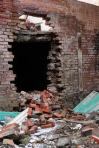
the walls are broken down and the gates burned!

the walls are broken down and the gates burned!

begun. As we start the New Year, it is imperative that we know or have an idea what we want to build and how we are going to do it. Rebuilding indicates that we are trying to recreate or restore something to its former glory. It also indicates that there was something there, which will offer a template towards what you are trying to achieve. For this year, we definitely need to restore the broken walls in the main areas of our lives and rebuild the gates that have disappeared. The three most important walls are:- family our faith and finances. By using the biblical model of Nehemiah’s efforts to rebuild the walls and gates around the city of God, Jerusalem, as our template, we will be able to accomplish great things.

So today let us start by looking at the introduction to his letter. “The words of Nehemiah son of Hacaliah.”  Here he states that he has a heritage. He is the son of Hacaliah, which means ‘God is hidden’ and he is Nehemiah, which means ‘God is our consolation.’ God was hidden from his people who were taken away into captivity because of rebellion, but now he is sending the son to bring consolation to them. Get the picture, God sending His Son to bring consolation to His people! What does you name mean and what part are you playing in the rebuilding process that God has planned for his people? Nehemiah did something to address the shame of his people, what part will you play in 2013?

Read Nehemiah 1:1-3.

Posted by: pastorapbell | November 20, 2012

as we allow our light to shine in the darkness!

In my opinion, the purpose of remembering is to allow us to progress. That is, we remember so that we do not repeat the mistakes of the past. This, I am afraid, is easier said than done. Although memory can be categorised and subdivided, essentially, for all humanity, there are broadly two type of memory; short-term and long-term memory.  Long-term memory retains information about certain procedures we repeat, such riding a bike, brushing your teeth, combing your hair and so on. Whereas, with short-term memory, information is retained that is specific to a task, like revising for an exam and so on. This is a very complex and intriguing subject, but it is the ability to remember, that allows us to be fully human. There are certain events in our lives that remain forever. The neuroscientists call these flash-bulb memory events. Like the death of Martin Luther King Jr., or the destruction of the twin towers in New York. These events stick in our minds and are transferred from our short-term to our long-term memory.

Although we are encouraged to forget the pain of the past, we never really jettison them. However, like Joseph in Genesis 37-52, we learn to deal with them by implementing a process of forgiving. I am convinced that this is the only process that brings healing, deliverance and restoration.  It is the ability to be able to connect with the past, which gives us a sense of continuity. For many of us, our history is misrepresented, misconstrued and sidelined; therefore, we have little connectivity with our past. And so unwittingly, we repeat and continue to repeat many of the mistakes our fore-parents made.

In sum, we thank God for the liberating act of Jesus, who died for us, and gave us [humanity] the opportunity to be free by becoming the curse for all (see Galatians 3:13). By the way when we are singing, Hosanna, Hosanna, we are in fact singing ‘freedom, freedom’, blessed is the one who comes in the name of the Lord! Thank you Jesus that, we can remember what you did for all of us! We as African Caribbean were airbrushed out of contemporary history, but you remember everything about us.

Read  Genesis 50:15-21 and Galatians 3:6-14 and meditate.

Posted by: pastorapbell | November 13, 2012

as we remember the former things!

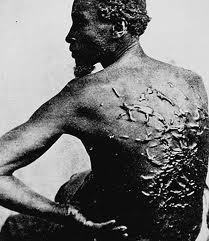
As we celebrate remembrance Sunday (11th November 2012) and reflect on those who sacrificed their lives for us to be free to participate in a democratic society, let us also remember how the history of those taken to the Caribbean was systematically ‘air-brushed’ out of the history books. History recalls that, Wilberforce and his workers almost single-handedly dismantled the Trans-Atlantic slave trade and slavery itself. It makes little mention of the efforts of conscientised members from the slave communities. People like, Paul Bogle, William Gordon and Sam Sharpe from Jamaica; Toussaint L’Overture, Jean-Jacques Dessalines and Donatien-Marie-Joseph de Vimeur from Haiti. If the slaves had not rebelled in the Caribbean and made the business of providing sugar for the sweet-toothed British, uneconomic, then perhaps slavery in the Caribbean would not have been abolished in 1834.

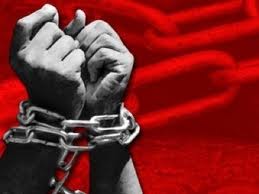
Let us also remember that the Church of England, the Catholic Church and many of the protestant churches with us today were complicit in the Trans- Atlantic slave trade. And although the Quakers were Christian pacifists, the chains used to tether slaves once captured on the shores of Africa, were made in Cadbury’s foundries in Birmingham.

So, whilst we remember those who died in the wars of 1914-18 and 1939-45 and the subsequent wars to date, history needs to actively cite those great men of colour who were instrumental in abolishing of the worst incidence of human trafficking in the history of humanity.

Let us remember those who died in the great wars, but let us also remember those who are still living with the continued effects and the emotional and spiritual scars from slavery.

Read Luke 4:18.

When the Holy Bible states that Abraham heard the voice of the Lord and followed him, what does this actually mean? Does God, who the bible states is a spirit, still speak today, or are we operating under our own sense and sensibility, or is it that many of us in our various cultures and conurbations simply do not tune into his frequency?

Since the age of reason in the 18th century, there have been many ideas about the nature of our existence. The arguments range from; ‘whether there is an intelligent designer’ or ‘is humanity here because of the changes to a single cell organism’ due to evolution.

For all of us who are followers of Jesus Christ, and are heirs to the promises made to Abraham by the eternal God, we believe Yahweh is a God who is intimately interested in our history from conception to the grave. Since this God is interested in us, we believe that He still speaks to us today. The question that is at the forefront of our thoughts is do we hear him when he speaks?

So how does God speak to us his children? We believe there are several ways God speaks to us. The first is through his words, the Holy Bible secondly, through dreams and visions and thirdly, by his Holy Spirit. The question for you today is this, by which method is he speaking to you and are you listening? Read what Peter says in his first book in chapter 4.

Posted by: pastorapbell | October 19, 2012

as our promises received cause us to altar our sacrifices!

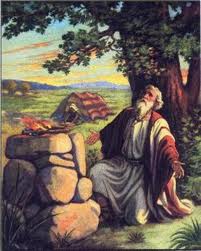
Abram made an altar when God made a promise to Him. Throughout his lifetime Abram and then later on as Abraham heard the voice of the Lord and did exactly what God instructed him to do. We can classify our Old Testament antecedents as people of faith because they heard, listened to and followed God’s instruction. Noah heard God tell him to construct a gigantic boat in the middle of nowhere to save his generation from impending danger to come. He heard, listened and followed God’s instructions and although his promise took 120 years to materialise, he and his family ‘were saved’, which condemned all those who jeered him, laughed at him and called him all the names under the sun to death. When God’s promises were realised Noah build an altar and offered up sacrifices to God.

The altar they built was typically made of stone, which was natural and not worked on at all by human hands. It had to be flat so that they could lay the sacrifice on it and carry out the slaughter.

In Genesis 22 God instructed Abraham (notice the name change here) to take his only son and offer him up as a sacrifice. This was the precursor to the offering up of Jesus Christ, God’s only son as the one time sacrifice for all of humanity. Abraham’s only legitimate son Isaac was spared, but God’s only son, Jesus, was sacrificed for us. By building an altar you are indicating that you are about to make a sacrifice. By making a sacrifice, you are indicating that you are giving up something precious. By giving up something precious, you are putting your wants and needs on the back burner for the greater good. The nature of sacrificial offerings is giving up something that is precious to you. And the altar is the place where you offer up this sacrifice. The motif of sacrifice, offering, promises is a recurring theme throughout human history. So what promises have you received and what offering are you going to place on the sacrificial altar today?

Read Genesis 22.

Posted by: pastorapbell | October 9, 2012

as we build our altar to the most high

When God called Abram (Gen 12), he heard the call and followed him immediately. There was no ‘let me get my house in order’ or let me throw a party and say goodbye to my close friends. He left his father’s house with all their cultural practices and went after the invisible God. This is the kind of faith that God (Yahweh) responds to, people who listen to his still small voice, hear clearly what is being said and then act. Abram was a mature man when he was called by God and was given promises that seem to take an age to ‘come to pass’. However, as soon as he came to the first landmark after following the Spirit of the Lord, he was reminded of the promises from God [I will bless you and give the land of the Canaanites to your offspring, v.7] and we are told that he built an altar to the Lord (Gen 12:8). I would suggest that as he travelled by stages towards the south, at every landmark where he heard from God he would build an altar.

Today I want to ask the question, when was the last time you heard the voice of the Lord? And when or where did you build your altar?

For Abram and his descendants an altar was a place where they sacrificed animals, turtledoves and so on. It was a place of death. Where life was taken and blood was shed to preserve their own lives. Today, we can build an altar. On this altar, there is no need to offer up animals or birds, but one where we offer up sacrifices of praise and thanksgiving. Therefore, it could be at the side of your bed or in your office. Offer up praises that we are saved and thanksgiving for all the marvellous things that God has promised us.

So today, go on, build your altar.  Read Genesis 12.1-9.


Posted by: pastorapbell | September 26, 2012

as we maintain our new status at the foot of the cross!

Every process needs to be revisited if it is not then complacency can set in. Complacency is an enemy that slowly creeps in and thwarts the good plans you had. A new creation quickly becomes an old creation when the reasons for being a new creation are forgotten. Good habits are soon forgotten if they are not repeated on a daily basis. To maintain is to revisit and repeat often. Therefore, forgiveness, repentance and renewal of the mind become a lifestyle, not a one off occurrence. Similarly submitting to the will of God and walking in humility ensures that you are walking in the Spirit. That is the path of the Spirit, the path of righteousness and not doing things for selfish reasons. One of the things that defeat many Christians is their ability to forget. Many of us forget that we were once shameful sinners, doing things and going places that we subsequently became ashamed of. We forget that if it was not for the grace of God, we could be maimed, behind bars or worst still in the earth somewhere.  Every one of us needs continuous personal development (CPD), this process starts by taking us back to the cross on a daily basis. The apostle Paul reminds us that living for Christ means dying to self. So, as a new creation, for me to live means dying to complacency and developing my spirit on a daily basis.  Read Philippians 1.

Now restitution is the recovery of everything that was stolen or lost to the original owner. Wow, how would you like to receive everything that was every stolen from you back? For many of us this is quite a daunting proposition. The processes that we have gone through, the relationships that have failed, the things that were stolen from us, have left an indelible mark on us. So, even though we are restored the scars are there for all to see.

Although this may be the case in the natural, there is a different outcome in the spiritual. When God instituted the process of total restoration, he did it in such a way to enable us to go through the processes but come out the other end just as if we had never gone through it in the first place. This is the process that theologians call justification. We who were dead in our trespasses and sins, who were following the course of this world, living as disobedient children, have been elevated to a place far above where we once lived. It is from this vantage point that we can now look back and recognise how broken we were. It is from here that we can join with John Newton and sing, ‘amazing grace how sweet the sound that saved a wretch like me’ and give thanks to God for finding us. It is from the place where we can effortlessly fall on our faces like the angels and cry Holy, Holy Holy to the Lord God almighty who was and is and is to come’ since the whole earth will be full of his glory.  The process [humbleness of heart, baptism in Holy Spirit, submitting to the will of God, listening to the Holy Spirit, being conscientised, renewal of the mind, forgiveness, repentance, deliverance, healing, restoration and restitution] is complete and I am now a new creation, created in Christ Jesus for the sole purpose of bringing glory to God in all that I do. And so I can now stand tall and say like the apostle Paul “it is not I that live, but Christ that lives in me” and therefore the issues that plagued me when I was lost, and kept me ignorant when I lived as a disobedient child have all been thrown into the sea of forgiveness and remembered no more. From now on, I will stay in that heavenly realm and live to praise and thank my Lord and my God, Jesus! Text to meditate on: Revelation 4:6-11; Isaiah 6:1-3 and Ephesians 2:1-10.

Now restoration is the careful skill of bring back something to its original glory. Can you imagine the patience, skill and fortitude required to restore an ancient piece of artwork? Or, on the other hand, the skill required to remove the rust and debris from a piece of precious material without damaging the material itself. This is the sort of delicacy required to bring restoration to an inanimate object. Imagine the patience, skill, endurance, attention to detail and resilience require when restoring the human spirit?

For restoration to occur in us we must go through the pain that removing the outer superficial layer will incur. This can be as quick or take as long as is necessary to effect complete deliverance, healing and then restoration. We are delicate beings and when particularly a loved one in our early stages of development has crushed our spirits, it is like a lorry driving over a tender rose petal. To bring restoration to the rose, the restorer must be gentle, pay great attention to detail and be prepared to take as long as is necessary. Today, if you have been crushed, or have been damaged in any way, allow the precious Holy Spirit to gently caress, heal and start the restoration process in you. The end is in sight, keep holding on! Read Psalm 51.

« Newer Posts - Older Posts »

Categories