Posted by: pastorapbell | December 13, 2010

as we focus on the reason for the season

John tells us that Jesus came from above and is above all, whilst those who belong to the earth only speak of earthly things. Jesus was unable to testify about heavenly things because those surrounding him did not have the capacity to understand or believe. Like Nicodemus, they were living in the ‘soulish’ realm’ (John 3:31-36).
He reminds us that the Father loves the Son and has placed all things in his hands and that whoever believes in the Son has eternal life.

Today as we who believe in the Son celebrate his birth, the vast majority of people, especially retailers, see this period as a time to boost their annual sales figures. The whole world has gone commercial. Money talks and the birth of Jesus is subsumed in rampant consumerism. Some folks don’t have Christmas trees, others don’t give presents. Let us have balance in our lives as we celebrate Christmas but remember that it is all about Jesus. Christmas is not only about presents, food and drinks, but it is about God the father sending his only Son to be a light for all of his creation who sit in darkness.

 As we go out shopping we will notice that Jesus is seldom mentioned by any of our high street retailers. They are even removing references to Jesus from Christmas cards!

Let us fight to have Jesus at the centre of our nation again. Let us pray that the true light from God will shine even brighter this Christmas!
Posted by: pastorapbell | December 11, 2010

as we embrace the radical nature of the Son of God

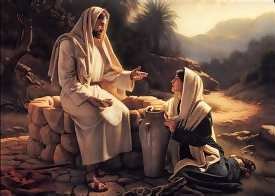
After the introduction to the mysterious nature of Jesus John get straight into the main course of telling his hearers about the uniqueness of Jesus and how he relates to those on the margins, those at the centre and those in the intersection. We are presented with a scenario that would never happen with a traditional Rabbi. Jesus gets into a dialogue with a woman by the side of a well at midday. Now we learn from John that the woman is a Samaritan. These are people who were the product from liaisons of the descendants of Israelites with the surrounding nations. So today they would be called mixed heritage. They we virtually outcasts, belonging to neither group. We must also remember that in those days women did not have a voice and were always on the margins. To make matter worst, this Samaritan woman had a chequered past. However, it is Jesus who makes the first move. May I have a drink? (v.7) why are you asking me that for, our people don’t talk let alone eat together, so who do you think you are? Who do you think you are? (vv.8&9). Jesus moves the conversation from the natural to the spiritual and eventually awakens the dormant spirit of this broken abused woman (vv10-24). After this encounter the woman left the task she came to fulfil and went into her city to evangelise! She had heard about the Messiah, knew about her religious heritage and practices but never had a real relationship with a God who was prepared to accept her as she was so that he could turn her world upside down.

This Christmas let us be reminded that our lives can be radicalised if we stop running around and sit and have a drink with Jesus. Your drinking habits will never be the same.

Have a read of John 4.

Posted by: pastorapbell | December 10, 2010

as we travel with john back to the future

John’s gospel does not start with the birth narrative like Matthew or Luke nor does it go straight into the work of Jesus. He takes us back to the future. “In the beginning was the word and the word was with God and the word was God. He was in the beginning with God, all things was made by him and without him nothing was made that was made. In him was light and the light was the light of men. The light shone into the darkness but the darkness did not understand it” (John 1:1-5 paraphrased).

John is presenting us with a pre-existent Jesus, one that holds all things together, made all things and then left his glory to come in humility to redeem his fallen creation.

He was born to an unmarried teenager whose fiancée nearly abandoned her (became flesh)

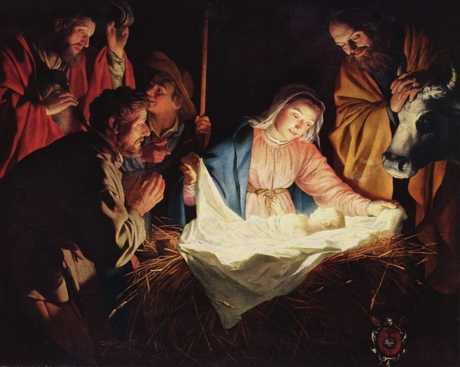
Born in a smelly stable where animals lived during winter

Spent his formative years as a refugee asylum seeker in a strange land (Egypt)

Grew up in a n obscure village called Nazareth

Trained as a carpenter, making rough timber smooth

At the age of 30 went on a preaching tour for three years that started a movement which continues today

Was betrayed by a friend (Judas)

Left to die on a rough piece of wood (became a curse for us. “Cursed is anyone who hangs on a tree” Gal 3:13)

Rose from the dead

Ascended to heaven

And is coming soon!

What a saviour! And like John all we can say is “those who believe in him are not condemned; but those who do not believe in him are condemned already, because they have not believed in the name of the only son of God (John 3:18).

Amen


Posted by: pastorapbell | December 8, 2010

as we consider what it is to be “born again”

In chapter three of John’s gospel we are presented with a term that has become a mantra for many Christians.

This is the Kingdom of God

Although this is the only gospel where Jesus makes this statement many denominations and fellowships live and die by it. You are not saved unless you are born again! I am a born again Christian! You must be baptised using a certain formulae or you cannot enter heaven!

All these statements are contentious and miss the point that Jesus was making and which is made elsewhere in other gospels. We must remember that the greatest interpreter of scripture is scripture itself. We are reminded in scripture that we should read ‘line upon line and precept upon precept’ (Isaiah 28:10), so that we do not take things out of context or skew their meaning.

Jesus taught his hearers that the kingdom of God is here. That is; the king had arrived announcing a new and dynamic kingdom where the principles it operates by are completely opposite to those of the kingdom of humanity. And so when Nicodemus approaches Jesus in secret and enquires if he could be part of his kingdom and still be a religious zealot, Jesus responded with a categorical NO! The kingdom of God is a spiritual kingdom and can only be accessed by faith. However, for you to enter into this kingdom, you must believe in the king openly, renounce false religious practices and develop a new mindset (Romans 12:1&2).  

So today we are called to be ‘born again’ by believing in Jesus as the lord of lords and the king of kings; asking Jesus to baptise us in and with the Holy Spirit and living honestly and justly with our fellow men and women.

The only other person who uses the term is Peter in 1Peter 1:23 and as we have seen by embracing King Jesus his life was revolutionised.

Read John 3 and put on your spiritual 3D spectacles!

Posted by: pastorapbell | December 7, 2010

as we submit to the authority and power of Jesus

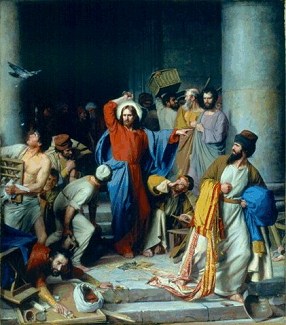
After leaving the wedding in Canaan, John takes us to the temple in Jerusalem where the people had subsumed to doing things that were outside the remit that God gave them through Moses. He presents a side to Jesus that many of us never see.  Particularly at Christmas when we think of gentle Jesus meek and mild, one who is innocent and would not harm a fly. John tells us that knowing that they had made the house of the Lord into a market place Jesus made a whip and drove them out (St. John 2:13). Matthew tells us that he overturned their tables and scattered their money on the ground (Matt 21:12ff). Like today people had made the house of God into a farce. Instead of praying and fasting they were having fetes, bingo games and even feasts. For us today it is time to return to our original mandate. The house of the Lord should be a HOUSE OF PRAYER.  David recommends that we enter his gates with thanksgiving and his courts with praise (Psa 100:4). So the question for us is this: what have we made the house of the Lord? Is church a place we go to when we feel down or a place we go to hear a personal prophecy or to get a word? Or is church a place where God lives by his Spirit? If it is a place where God lives then like David we should go there to give thanks not to get our egos pampered or our lust for a quick fix satisfied.

Those who congregates in any place and call on the name of the Lord will be saved (Rom 10:13). For when we call on his name he will come in power and bring healing, deliverance and restoration to all. As we approach Christmas let us remember that Jesus is no longer a baby or is in the grave but he is making intercession for us so that we can recognise his power and his might.

Read St John 2:13-25 and Matthew 21:12-17 as you asks yourself, should I be doing spring cleaning in December?

Posted by: pastorapbell | December 6, 2010

as we join John on his journey of excitement

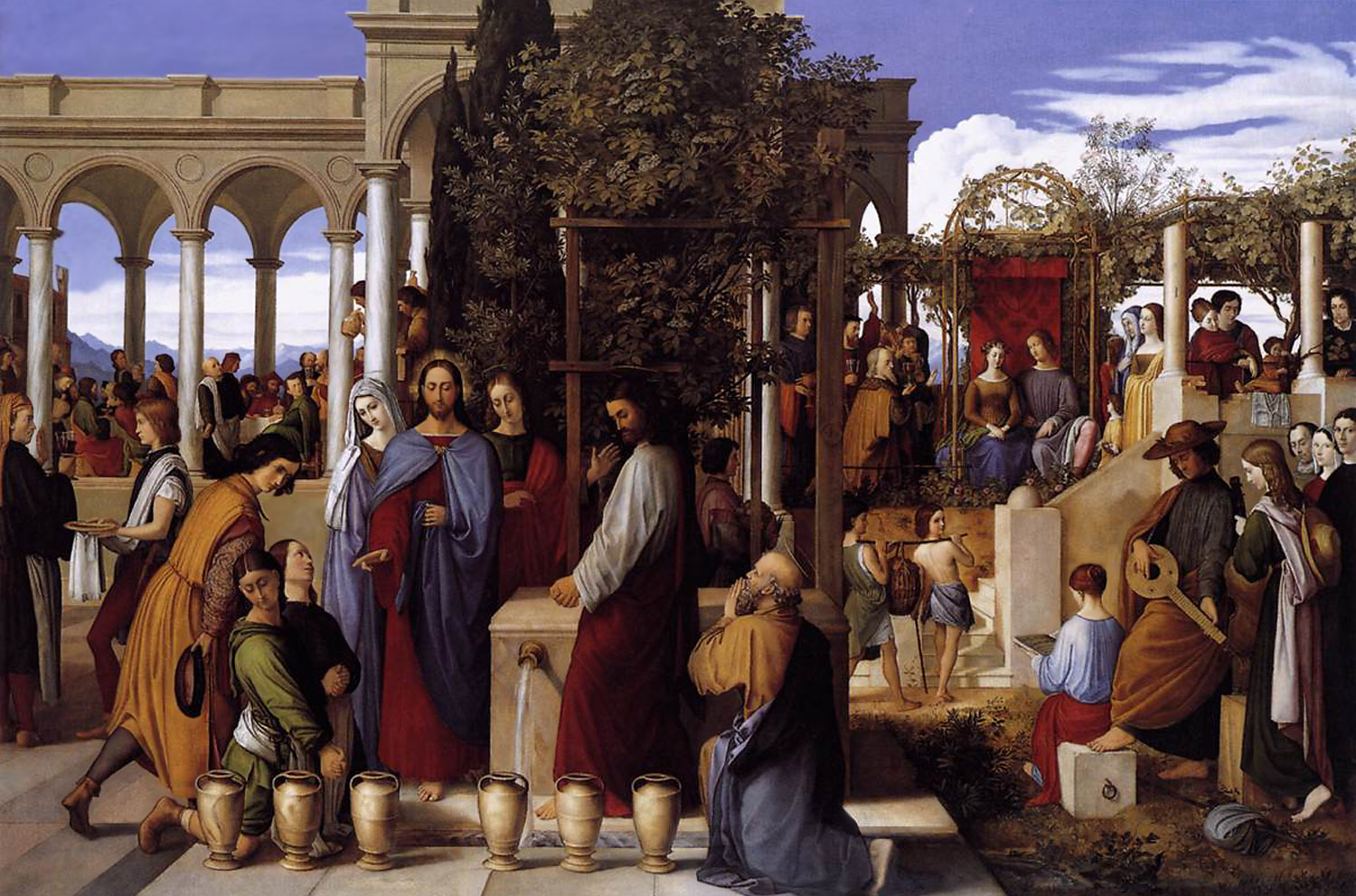
When John stated his journey of following Jesus he was always on a high. He records in chapter 2 the incidence of Jesus turning water into wine. Although he was still probably teenager, drinking wine was not seen as a problem. Indeed it was healthier to drink wine that water during those times due to hygiene and sanitation issues. Jesus was not sanctioning getting drunk or drinking to excess, since this was only the third day of the wedding. What he was doing was demonstrating his power over nature and John reports this early in his account to show that Jesus was truly greater than their Jewish concept of Messiah.  Two things to note here: 1. Jewish weddings lasted for about a week and was finalised by the bridegroom coming at midnight to get his bride (see reference to this in the parable of the virgins in Matthew 25). 2. The Jews thought their Messiah would come, sit on the throne of David and restore Israel as one of the greatest nations in the vicinity.

 Similarly today many people are still seeking a benign manby pamby Jesus who wipes their noses and dries up their tears. Jesus is the Lord of the universe as John demonstrates and we need to discipline ourselves so that we can serve him faithfully and fruitfully in our generation. He wants us to prosper, but prosperity in not just in the things you have but in how we relate to those around us. We ought to live our lives with an element of excitement but earthed in the fact that Jesus is Lord of Lords and king of kings and nothing is impossible for him.

Today the issue for us and John was not that Jesus turned water into wine but that Jesus is lord and king over the natural, spiritual and ethereal things.

Read John 2:1-12.

The apostle John started following Jesus as a young boy probably around the age of 15. We glean this from some of the reports in the gospels (see Matthew 17:24-27), where Jesus and Peter pay the temple tax but the other disciples does not. This is because in Jewish custom and culture you were not a man until you were 30 years old or above. As a boy disciple, he was allowed to follow Jesus because his mother was part of Jesus’ support network and so he tagged along. We can assume that his father had also assented to this because he had allowed his wife to cook and clean for Jesus. So John grew up seeing firsthand the power of God move in is community with miracles as an everyday occurrence.

When John had time to reflect and to write of his experiences, he writes about the man Jesus and portrays him as being fully man and fully God at the same time. So John say things like: “in the beginning was the word and the word was with God and the word was God” St. John 1:1. And “the word became flesh and lived among us, and we have seen his glory, the glory of the father’s only son full of grace and truth.” V.14.

In John’s time like today, everyone is looking for something to meet their felt and perceived needs, however these needs cannot be met and satiated until the spiritual hole that exists in all humanity is plugged.  And it can only be plugged by being reconciled to God through our Lord Jesus Christ. As a seeker John the beloved found Jesus as a young boy, followed him and left a legacy that has stood the test of time. Do you want to leave a lasting legacy? Find the holy one of God and follow and love him with all your heart soul and mind.

From his initial encounter with Jesus, John was a transformed individual. Read his initial account in St John chapter 1.

Posted by: pastorapbell | December 2, 2010

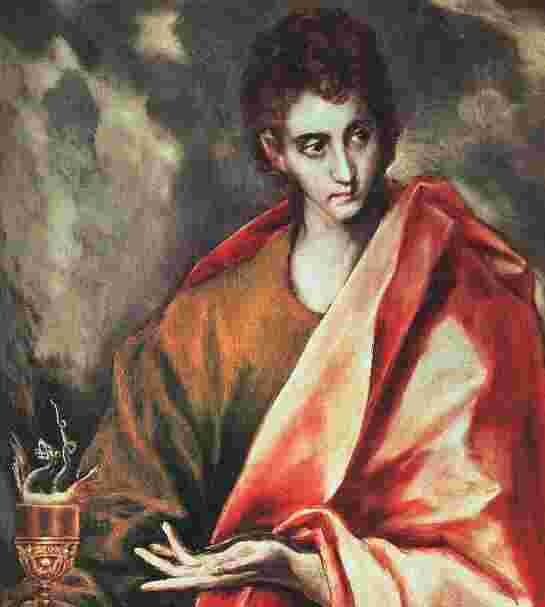
as we are introduced to St John the divine

John was born in Galilee probably between A.D. 10 and 15. He is the son of Zebedee and Salome. His father was a fisherman, a trade which John was plying when he met and joined Jesus (Mark 5:37). His mother joined the women who served the followers of Jesus (Mark 15:40-41; 16:1). His brother James also followed Jesus. Jesus nicknamed both brothers Boanerges, meaning in Aramaic “sons of thunder” (Mark 3:17), a reference to their rather fiery attitude to Jesus. It was their mother who asked Jesus if they could have the best seats in heaven (Matthew 20:10).

John and James, together with Peter, are presented throughout the Gospels as the most closely associated with Jesus of all his followers. John, with Peter and James, witnesses Jesus’ supernatural communication with Moses and Elijah on Mt. Tabor; he is present in the Garden of Gethsemane the night before Jesus dies. When all others leave the dying Jesus, John remains, and Jesus entrusts his mother, Mary, to John’s care. After the death of Jesus, John is presented as one of the leaders in Jerusalem as the followers of Jesus. In the Acts, John testifies to Jesus with Peter and James. He goes to Samaria with Peter to confirm new converts (Acts 8:14, 25). When Paul is converted, he submits his orthodoxy to John, Peter, and James (Galatians 2:1-10).

It is not known how John ended his life. Some traditions claim that he was martyred. Others claim he died at a ripe old age. Tradition from the 2d century claimed that John died and was buried at Ephesus. Today there is a house in Ephesus, Turkey which is preserved as the last place Mary and John lived before he was exiled to the isle of Patmos for preaching the gospel. John started following Jesus as a young boy and lived to see the glory of God, miracles signs and wonders after which he writes to his hearers this: love is from God because God is love. Therefore if you have not love you have not God. Right on John, we will hear some more from you tomorrow.

Read Mark 3

In many ways as study of the life of Peter gives us an insight into the complexities that confronts fallen humanity. We are enculturated and imbibed into a mindset that says: the way I see and do things is right and everyone else is wrong. We also buy into the notion that humanity is split into different races, and that all these races are different.

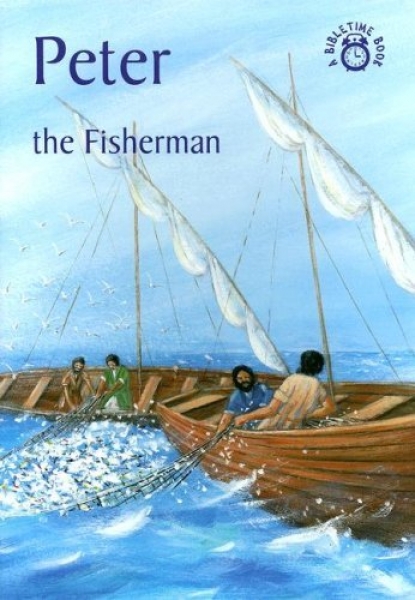
Frpm fisherman to...

When the penny drops, firstly we will recognise that our ways of looking at the world is entirely subjective and our views and perspective is dependent on where we are looking from. Secondly, we will come to the conclusion that there is only one human race and the purpose of Jesus dying on the cross is to reconcile Adam’s fallen race to God the creator, i.e. to make us spiritual again. So, all ethnic groups have the same basic needs and are all part of the one human race. We all need to be loved, to belong and to be significant. If these basic needs are not me then we will look for them in rather strange places.

These needs were exemplified by Peter and when he felt that they were not being met

Peter the Preacher

 he acted irrationally. He knew he should not lie, but he did. He knew he should have been loyal to Jesus at his time of need but he wasn’t and so on. However, after the penny had finally fallen and with the help of the Holy Spirit Peter was consumed with holy boldness and an overdose of humility.

Today when the penny finally drops for us, let us be consumed with boldness to proclaim with humility the fullness that Jesus offers and let us live justly before homo-erectus so that we can persuade them to be reconciled to God the father.

Posted by: pastorapbell | November 30, 2010

as we remove our cultural lenses to view new vistas!

The way Peter lived prior to meeting Jesus is typical for many of us. We go about our business and are concerned only for our wellbeing and for the wellbeing of our immediate families. Peter’s mindset was fixed in the way he saw things, which in turn dictated how he operated. He wore his cultural lenses at all times and accepted the status quo. That all changed when he was introduced to Jesus by his younger brother Andrew. After Andrew brought Peter to Jesus he is seldom mentioned in the scriptures, but he was there working away in the background, bringing more and more people into contact with Jesus.

Like Peter, many people go through life without taking off their cultural lenses and therefore fail to participate in the rich cultural diversity that God has afforded us. Once we are exposed to ‘others’ and their ways of doing things, our attitudes and tolerance levels can be revolutionised.

Jesus’ mission was to bring good news to the oppressed, to bind up the broken hearted, to proclaim liberty to those in captivity and release to those in prison (Isaiah 61:1-2). He gave sight to the blind, hearing to the deaf and healed those who had physical, emotional and spiritual ailments.

However, the greatest healing an individual can undergo is that to the human spirit. This only occurs when we open up to the Spirit of Jesus and allow him to remove our cultural masks so that he can reveal to us what it is to be truly human. Peter experienced this and was able to embrace the very people who were oppressing his nation for many years (Acts 10) to bring salvation to them.

Today can we be like Peter and allow the Spirit of the sovereign Lord to open up our blinded eyes, heal our broken hearts and release us from selfishness and bigotry? So be like Peter and let Jesus turn your world upside down.

Read Mark 14:26-31 & 16:6-8 see how Peter went from a denier to a pillar.

« Newer Posts - Older Posts »

Categories