Posted by: pastorapbell | July 1, 2010

As we develop the spirit of wisdom

“For attaining wisdom and discipline; for understanding words of insight; for acquiring a disciplined and prudent life, doing what is right and just and fair; the fear of the LORD is the beginning of knowledge, but fools despise wisdom and discipline. (Proverbs 1:2-3, 7 NIV)
as a man thinks so is he

Firstly, wisdom is the application of knowledge in a manner that brings prosperity to the individual. The wise are generally god fearing and apply principles that can be traced back to the sages of old, like Solomon and David, kings of Israel. The wise will always act in ways that are principled and upright.

From our text we see that Solomon outlines the requirements for obtaining and attaining wisdom, viz.

  1. Discipline; this is paramount if one wants to be wise. A disciplined one is one who is a follower and a learner. Good learners become great teachers.
  2. Understanding; to understand something is to grasp and appreciate a concept and the nuances associated to that concept so that is can be applied.
  3. Prudence; this describes someone who is practical. Wisdom dictates that what you are doing is practical and achievable.
  4. Justice; ensures that you are doing the right thing for the right reasons and doing it in a way that is both ethical and honest.

Solomon stipulates from the outset that knowledge and the wisdom that flows from this, is predicated by ‘the fear of the Lord.’ If we do not fear the Lord, then we will despise wisdom and suffer the consequences.

Today, fear the Lord, accept his discipline and make wise choices. The first choice should be to seek his kingdom and all his righteousness then all the other things will follow.

Read Proverbs 1

Posted by: pastorapbell | June 30, 2010

As we follow the leading of the Lord

The LORD is my shepherd; I shall not want. He makes me lie down in green pastures.
He leads me beside still waters. He restores my soul. He leads me in paths of righteousness
for his name’s sake
(Psalm 23:1-3 ESV).

As we come to the end of June let us reflect on the nature of the encouragement we have received from the psalmist and meditate on the ultimate goal. Once our motives are right then we will be led down the paths of righteousness. When the psalmist declares that the Lord is his shepherd he is taking a very important stand. Unlike the shepherds in the west who drive their flock and round them up with dogs, the Eastern shepherd who is the one being described here, leads his flock. Not only does he lead the flock, he sleeps with them, eats in their vicinity and knows them with all their inadequacies.

the good shepherd

The job of the shepherd then is to protect his sheep and guide or lead them to places of plenty where they can be refreshed with good green grass and have their thirsts quenched. This metaphor of God as the Eastern shepherd is exemplified by Jesus who is God and showed us by example how we as the thankful sheep should live.  The writer of Hebrews (2:17) declares that in all things he was like us, but like the shepherd he is, he went ahead of us showing us how to live a life in and guided by the Spirit. Jesus is the good shepherd because he leads by example. So he would get us early in the morning to spend time in prayer (mark 1:35); he would speak directly to spirits who were keeping his followers bound (Luke 8:43) and so on.

If Jesus is our shepherd then let us follow him even if it means going to the cross. We know that neither the cross nor the grave could contain him!

Read Psalm 23

Posted by: pastorapbell | June 29, 2010

As we keep the main thing the main thing

If I had cherished iniquity in my heart, the Lord would not have listened. But truly God has listened; he has attended to the voice of my prayer. Blessed be God, because he has not rejected my prayer or removed his steadfast love from me! (Psalm 66:18-20 ESV).

a pure heart

Once again we are encouraged to look at our motives for doing what we do. The psalmist is telling us of his experiences of walking with God and of developing the right attitude towards his companions.  Throughout this psalm he cajoles his contemporaries to praise God for who he is (v.1), praise him for what he has done (vv.3-6), and praise God for where he is taking us (v.12). It is after this tirade of praise and worship that the penny suddenly drops for the psalmists! Here I am praising God and inviting others to do the same, but…. and then he realises….My praise and worship are conditional!

The conditional statement relates to the state of my heart [my mind] and dictates that I clean up my act first before I encourage others to do the same.  This is what Jesus was teaching his hearers in the Sermon on the Mount. “Take the plank [of wood] out of your own eye first before telling your neighbour about the speck of dust in their eye.” i.e. don’t judge so that you won’t be judged and don’t share what God has revealed to you with everyone (Matt 7:1-6).

For the Lord to hear and answer our prayers we need to remove all rebellious thoughts from our hearts, love our neighbours and find two people who we can be accountable to, then the Lord will hear our prayers, accept our praises and grant to us the desires of our hearts.

Read Psalm 66

You will show me the path of life; In Your presence is fullness of joy; At Your right hand are pleasures forevermore (Psalm 16:11 NKJV).

Those who are led by the Lord will enjoy the riches that come from him even in times of austerity. Today the Psalmist is reminding us the Lord will show us what to do and where to go; it is up to us to go there and to do it.

As we mature in our Christian faith it is imperative that we develop an understanding of who God is and where he is leading us. Too often as Christians, we become complacent and allow that complacency to dictate our future.  The psalmist is encouraging us to understand that God will show us the path of life but we must take the step of faith to follow it. Once we take that step of faith, then we will enjoy the joy and the pleasures that comes from knowing God and having an intimate relationship with him.

When we look at the life of Jesus as recorded in the Gospels, we notice that his mantra was ‘I must do the will of my father’ (Matt 12:50), ‘I only do what I see my father doing’ (John 5:19), and for him, fullness of Joy was achieved by spending quality time with his father, see Matt 8:1.

Faith is activated by action and our action demonstrates our level of faith. As the famous liberation theologian, Paulo Freire said; Faith without action is mere verbalism and action without faith is mere activism.

Today trust the Lord, give him his dues and like the psalmist in psalm 16:8 always keep the lord before you!

Read Psalm 16

After Jesus and his disciples arrived in Capernaum, the collectors of the two-drachma tax came to Peter and asked, “Doesn’t your teacher pay the temple tax?” “Yes, he does,” he replied. When Peter came into the house, Jesus was the first to speak. “What do you think, Simon?” he asked. “From whom do the kings of the earth collect duty and taxes—from their own sons or from others?” “From others,” Peter answered.

“Then the sons are exempt,” Jesus said to him. “But so that we may not offend them, go to the lake and throw out your line. Take the first fish you catch; open its mouth and you will find a four-drachma coin. Take it and give it to them for my tax and yours“(Matthew 17:24-27 NIV).

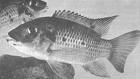
talapea galilea

There is a fish in the east called the Musht or the Talapia Galilea. This fish is apparently native to area of the Sea of Galilee. It is a small fish about six inches long with a large head.  It also has a pouch under its mouth. After new Musht hatch, the parents keep the new fish in the pouch for a short while to protect them.  Then when it is time, the parent fish will begin to pick up pebbles from the bottom of the sea and put them into the pouch to make the new fish so uncomfortable that it leaves the comfort of the pouch.

These Musht fish eats plankton, and so at certain times of the year they can be found in very shallow water.  Consequently they pick up shiny items such as gold and coins thrown into the river as sacrificial offerings.

Today, let us trust the Lord that he will provide such a fish for us; one that has twice as much as we need in his mouth. Jesus told Peter to take the fist fish he caught and the money would be in its mouth. The Musht was the same type of fish that the Jesus prayed over and fed nine thousand people (Mark 6:44 + 8:9). So let us trust the Lord to provide all our needs even at the eleventh hour.

Read Mark 6:30-43 + 8:1-10.

  I rejoice at your word as one who finds great treasure (Psalm 119:162 NKJV). 

Psalm 119 is the longest psalm in the bible. It begins by talking about those who walk in the law of the Lord and ends with a confession. The psalmist obviously had gone astray from the commandments of the Lord but he had not forgotten them.

Throughout the psalm he is consoling himself that the Lord will save him from his enemies (v.95), will teach him his statues and give him understanding so that he will keep the Lord’s laws (v.33), and he will make it his duty to continually open his mouth and praise the Lord even at midnight (v.62).

One thing we can take note of is that this person is serious about his relationship with the Lord. And even though he has ‘backslidden’ that is, he has gone away from the teachings of the Lord, the words that he memorised when he was a child brings him back to the reality that everything he needs is in the Lord.

Once we recognise that everything we need is in the Lord, then our attitude towards his word, his spirit and his body, the church will radically change.

For the psalmist, being joyful because of these facts became a lifestyle. So much so that he reminds his hearers that his intention was not to sin against God, even though sometimes this was unavoidable, but that the truth of the word would convict him, bring on a spirit of repentance and propel him into praise mode.

Thank you Lord for your graciousness your mercy, your love and your capacity to forgive me even though I don’t deserve it, amen.

Read Psalm 119:160-176.

Posted by: pastorapbell | June 25, 2010

As we keep the words of the Lord guarded in our hearts

I have hidden your word in my heart that I might not sin against you (Psalm 119:11 NIV).

heart with hinges

As we keep the words of scripture in our hearts they steer us away from danger and from doing the wrong things even for the right reasons. The psalmist knows that given the right circumstances and without the restraint of a living conscience, we will always do the wrong things.

It is our consciences that rain us in ensuring that we do the right things for the right reasons. It is for this reason and this reason alone that we are encouraged to treasure the words of the Lord so that as a result we will not sin against him.

Sin is still the big problem. It was many years ago and still is, and can simply be defined as disobedience. The problem we face as a society is this: not knowing what God requires of us, dictates that we just do not know where the lines of demarcation are. And not knowing what God say about particular conditions causes that line between sin and right living to become sullied.

It is for these reasons, i.e. having a clear picture of where the lines are, so we do not cross over them, that the psalmist informs us of the importance of keeping the words of scripture in our hearts so that we do not err. To make the word come alive we can:- sing the word; put them on the walls in your bedroom; recite them as part of your daily devotion. Take copious amount daily so that you know and understand what God has said, is saying and will say. If you treasure them in your heart, then the propensity to sin, that is to disobey them is greatly reduced.

Today’s question is: how can young person keep his way pure? Answer: By living according to the word.

Read Psalm 119:9-16.

Posted by: pastorapbell | June 24, 2010

As we hide the word of the Lord in our hearts

Your word is a lamp to my feet and a light to my path (Psalm 119:105 NRSV).

the light of the world

As we discussed earlier, references to the heart is notionally talking about the centre of our being, but practically talking about our minds. Our minds are unique among all living creatures. And controls our language, speech, how we remember, imagine and perceive the world. And for me, these are the very reasons why our mind must be renewed when we are saved from ourselves and to the Lord.  

Our memories play a huge part in our humanity. This is why we have so many rituals and focal points in scripture. Here are just a few; we have the rainbow as a memorial to us that God will never destroy the earth again with a flood. The next time you see a rainbow, think of the devastation of the flood during Noah’s time and thank God that he is true to his word.  We also have the various Jewish feasts such as the feast of Passover. This reminds the Jewish people of their passage from slavery to the Promised Land. And so every time they celebrate the Passover they remember the pain of slavery and celebrate the miraculous deliverance of their God. The act of remembering makes us human. Without the ability to remember, we lose the essence of what it is to be human and may revert to acting like some animals and carry out inhumane acts. 

It is for this reason that we are encouraged to renew our minds and think like Jesus did (Philippians 2). When we do, we are able to forgive those who use us and despitefully abuse us. Be reconciled to those who are estranged from us and praise God for the fact that we can remember that his mercies are from everlasting to everlasting and it is he who punishes those who are wicked and not us.

Read Psalm 119:105-112.

Posted by: pastorapbell | June 23, 2010

as we guard ourselves against a heart attack.

Your words have I hid in my heart that I may not sin against you (Psalm 119:11 NKJV Paraphrase).

When the Psalmist uses a phrase like this we should recognise that he does not literally mean putting the word in the physical heart. What he is conveying is this: the word of the Lord is placed in the innermost part of the human being,

broken heart

the control centre, from which our character is determined. This is the mind.  It is here that all major decisions are made and actions taken. Our most precious asset is our minds. When we lose our minds we lose the ability to reason and hence we become unreasonable or even vegetables. Not that reason is our guide, but that we are able to make conscious decisions and take a stand.

The writers of the sacred text we live by had the notion that the heart, the organ on the left-hand side of the body, was the centre of the human being. Therefore all their speech was centred on that organ. So Jesus is quoted as saying “out of the abundance of the heart, the mouth speaks” (Matt 12:24) ; and the apostle Paul says “with the heart man believes and with the mouth confession is made unto salvation” (Romans 10:10).

For the psalmist then, when the word is placed in our control centre, our lives are regulated by it. On the contrary if we are ignorant of the word, we are judged by that ignorance and in ignorance we are condemned. This is why time and time again in scripture we are encouraged to keep our hearts clean, Psalm 51:10, and reminded that we will be blessed and we will see God if we have a pure heart, Matt 5:8.

Today hide the words of the Lord in your heart, that is, read the word and meditate on them, for they shall keep you in times of trouble.

Read Psalm 119:1-13.

Posted by: pastorapbell | June 22, 2010

As we remember that all God wants from us is our worship!

I will bless the Lord at all times, his praise shall continually be in my mouth (Psalm 34:1 NRSV).

Praising God at all times requires an enormous amount of discipline. The “ALL” suggests that even when things are really bad, the onus should be on us to praise God. And there are valid reasons for developing an attitude of gratitude. Until you encounter the truth of God’s word and see with your natural eyes the things that are orchestrated through his divine favour, you will not understand why the psalmist makes such a statement.

Praise is a deliberate act of using your vocal cords to make a noise. In the current sporting climate many people are doing this to praise and worship eleven representatives of their country who are chasing after a small ball with the determination of getting it in the opponents net. Some are so passionate that they have saved up thousands of Pounds/Dollars/Francs or Euros to travel thousands of miles to offer up their praise and their worship to these demi-gods.

For us who follow Jesus, it is imperative that we develop the attitude to praise him continually.  This should be regardless of our circumstances. V.18 tells us that the Lord is near to the broken-hearted and saves those whose spirit is crushed. Our God is a God of the oppressed, who delivers those who call to him in desperation when they have nowhere else to go.

Today, learn to praise him regardless until worship comes, and worship him until his glory is manifested in your situation. He will come in power.

Read Psalm 34.

« Newer Posts - Older Posts »

Categories