Posted by: pastorapbell | October 13, 2010

as we rediscover the real meaning of commitment and loyalty

During their forty years travel in the wilderness the people of God complained, moaned and challenged the authority of the man of God, Moses. Although the majority of those who challenged Moses throughout the forty years that it took to arrive at the Promised Land died in the wilderness, the trait that they exhibited still lived on. 

The purpose of the circumcision was twofold. The first was to reinstitute the covenant that God made to Abraham and the second was to bring about transformation of the minds of the people. It was God’s intention for the hearts of the people to be circumcised as later stated by Ezekiel (36:26). When we speak about heart we are speaking about the centre of human being. In the time of the biblical writers it was thought that the centre of the human person was the heart and the entrails that surround it. We now know that the centre of the human being is the mind. And it is the mind that needs to be transformed as our thoughts become words which become actions then habits which determines our character and destiny.

For all that their parents went through in the wilderness there were still a minority of God’s people who thought that they knew better that the man that God spoke to.

We are reminded by a later biblical writer, Apostle Paul, that our battle is not against flesh and blood but against principalities, rulers of darkness and other spiritual forces in the atmosphere (Ephesians 6:12). So we are not called to fight each other but to be committed to each other and to the vision that God has given the leaders he has placed over us.

So today, be committed to what God ordained for you to do and ensure that your mind is continually renewed.

Read Ephesians 6:10-20.

Posted by: pastorapbell | October 12, 2010

as we reflect on the consequences of indiscipline

I shall not bow

Sometimes our stubbornness leads us to justify our inability to listen to wise counsel. We want things to occur our way and if it does not then we rebel. This is at the heart of the human problem. We are given clear instructions by our creator, but because we cannot see the next step we rebel and do things our own way.

This is why the Gilgal experience is so vital. It is here that we learn to develop that trust that will bring us great success. Although my way may seem good and proper, it may not bring the best result now. In the camp at Gilgal there were many people who would have questioned the strategy to march around a city to conquer it, when all the necessary resources were at their disposal and the inhabitants of the city were terrified of them (Joshua 5:1). God had already told Joshua that he had given the land into his hands.

The lesson for us today is to learn to stay in step with what God is working out. Disobedience leads to rebellion which is ‘witchcraft’. Our minds have been sullied by the popular press who present witchcraft, Wicca and wizardry as a benign art practiced by old men and women and innocent boys and girls dressed in black riding on broom sticks or performing tricks. From a scriptural perspective, all rebellion is witchcraft, that is, the person practicing it is operating in rebellion, like Lucifer (Isa 14:12), Jezebel (1Kings 16:31) and Bar-Jesus the sorcerer (Acts 13:6ff). A rebellious person goes against the vision and command of their leader. This creates di-vision. This is at the root of rebellion.

We see this after the great success of Jericho. Everyone is instructed what spoils they can and cannot take, however Achan rebels against this and hides clothes and jewellery in is tent. This act of disobedience causes the death of 36 of his fellowmen and eventually causes his whole family to be wiped out.

So if we as soldiers want to succeed in whatever God has called us to do, let us practice the art of obedience. Saul lost his throne at Gilgal because of disobedience. Thank God for Jesus who rescued all of us when he sacrificed his life for us at Gilgal!

Read Joshua 7

Posted by: pastorapbell | October 11, 2010

as we learn the art of waiting

We are told that good things come to those who wait. It is in the waiting process that we develop the discipline and the routine to become effective agents for change. Whilst we are waiting and recovering, we are practising the routines, various drills, hand to hand combat and reconnaissance techniques that develop the discipline that makes good soldiers better.

Great soldiers are those who learn obedience and discipline. They learn to wait for the right openings before they start an assault. It is also important that when they attack it is done as a unit, if they act as individuals they will get picked off. We can only develop through rigorous repetition and attention to detail.     

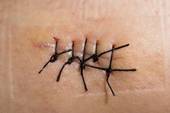
Throughout the healing process we will see the scars which remind us of past defeats and transgressions. Although these memories are hard to erase, the new experiences we get from being obedient to our spiritual leaders, working together as a team of soldiers to fight the common enemy supersedes the previous experiences and has the effect of erasing some of these scars.

Whilst waiting we are not sitting around playing cards or board games. The waiting time is a time of preparation, a time to practice new techniques and try out new formations. We do all the drills in the camp, not out there on the battlefield. Those who try to learn and fight at the same time will be destroyed. It is not impossible but very difficult to learn and then implement what was taught perfectly for the first time. 

The ‘Joshua generation’ had to wait for over 40 years before they got Egypt out of them. Unless your mind is changed you will still try to use the old tactics you learned whilst in captivity.

Today as we learn to trust the Lord and accept his discipline, let us learn the art of waiting on him!

Read Psalm 37

Posted by: pastorapbell | October 10, 2010

as we anoint the scars to effect normal wound healing

Wounds take time to heal

When our skin is pierced or torn in some manner, the invisible agents under the skin get to work to repair the torn or broken skin. Healing takes place over time and cannot be rushed. Once the wound has occurred it must go through the stages of healing.

There are three stages of healing:

Stage 1 starts straight after you have received the wound and last for 3-5 days. This is the inflammation stage. When the wound occurs the body goes into emergency mode. Blood supply around the wounded area increases and specific cells are attracted to the area to clear up as much debris as possible.

Stage 2 is repairing the wound. As soon as the inflammation reduces, blood vessels move into the areas and start to produce scab which protects the wound as it heals.

At Stage 3, the cut has now healed but the tissue that replaces it is not normal skin, it is scar tissue which is not as strong and unlike skin does not stretch. To cope with this, the body then continuously alters the scar attempting to make it stronger.

There are many wounded soldiers in the body whose wounds have not gone through all the stages. As soon as the scar tissue appears even if it is not as strong as normal skin, they rejoin the battle. This has the effect of infecting the wound which then becomes a sore a can cause permanent damage.

How does this affect me?  Are you one of those wounded people who did not wait for you wound to heal before you are off to another camp?

Hurting people hurt people. When a soldier is wounded in the spiritual sense and that wound has not been healed, the tendency is to run to another camp. And because the situation that caused the wounding in the first place was never dealt with, that person becomes a distraction and can cause problems. So how do we effect the healing?

Once we recognise how the wounds occur and who caused it, we can move to bring healing by forgiving those who wounded us and asking forgiveness from those we have hurt. For complete healing to occur, forgiveness and repentance must be the first stages in the process.

Today forgive those who hurt you in the past, and don’t stay at the inflammation stage move on to stage 3 where total restoration can occur.

Read Psalm 119:9-16; 105; Matt 5:10-12.

Posted by: pastorapbell | October 9, 2010

as we reflect on the dead flesh

Since, then, you have been raised with Christ, set your minds on things above, where Christ is seated at the right hand of God (Colossians 3:1 paraphrased).

follow God or our feelings

As we have been discussing, the flesh represents the nature that is rebellious and against everything that God ordained when he created us. This is not purporting that we have two natures, one good and the other bad as some do. We have one nature and free will.  That is we have the ability to make choices. We can choose what colour we paint our houses/flats/rooms, what food we buy, what programmes we watch (assuming we have a television), what and where we eat and who we listen to.

 Again this does not imply or imply that we have two natures as some suggest, only that we choose to make choices that go against what God desired for us. This is part of the flesh and that is why it must be cut away.

There are two things that were very poignant about the circumcision that Joshua carried out at Gilgal;

  1. The flints were rough and ready and were not sterile
  2. The patients were operated on without anaesthetic

One of the hardest things to do in our spiritual walk is the removal of the ‘flesh’. Sometimes we have to go through the pain of the operation only to find that we succumb to some infection or the other and that the ‘flesh’ has grown back but not in the correct manner, rather like those do it yourself ear piercings that produce bulbous flesh behind the ear. Secondly the fact that there was no anaesthetic means that the whole process was a rather painful one. Developing humility, patience, longsuffering, kindness, gentleness and so on is hard work. However these virtues are opposite to the vices of anger, wrath, badmindedness, bitterness, hatred and malice. The virtues are products of the fruit of the Spirit, whereas the vices are the default position of fallen humanity.

So today which will it be? The pain of the operation to cut away the flesh, so that we can be under authority and get in step with the Spirit: or reject the pain for now and follow our feelings?

The choice is ours and remember it is a choice.

Read Colossians 3:1-17

Posted by: pastorapbell | October 8, 2010

as we begin the healing process


Total recovery is essential

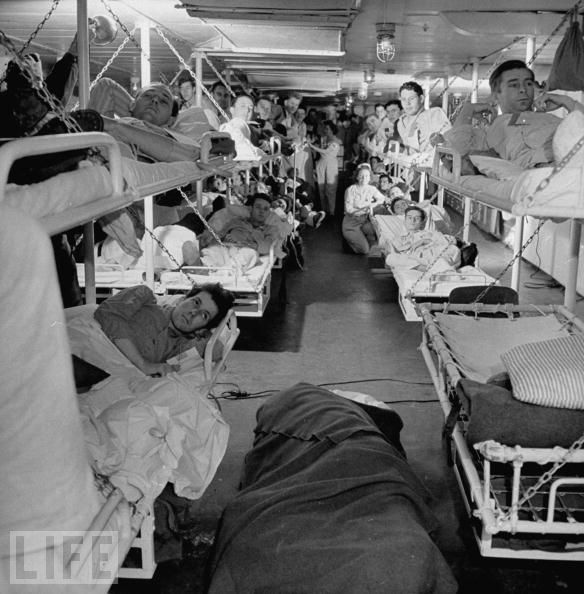
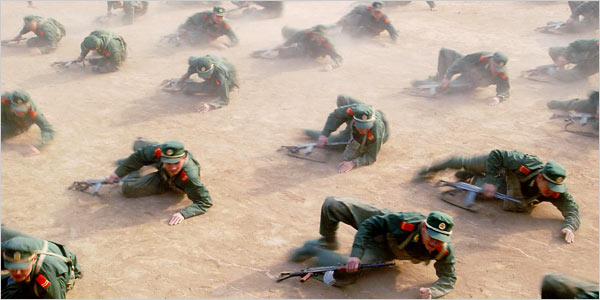
After the flesh has been removed, each soldier must assume the recovery position and wait to be healed. The healing process can be a slow one. This is where a lot of soldiers lose the plot.  It is impossible to go out fighting when you are wounded and your wound has not been fully healed. Once the process starts it must be completed before the soldier returns to active duty.

Walking and operating in the ‘flesh’, is the position where we are making decisions and taking actions according to how we feel and not according to what our commanding officer is saying. The ‘flesh’ can be seen as us operating out of our ‘soulish’ persona. It is here where we are led not by the Spirit of God but by our feelings and our emotions. Our feelings and emotions are very ‘reactive’ where as our spirit is ‘proactive’. So we behave like the thermostat in our living rooms, as the temperature drops we increase the heat output and as it falls we decrease it.  On the other hand, when we are led by the Spirit of God the fluctuations in our feelings are levelled out by the fact that we know that outcome will be the best one for our situations. Since God wants the best for us, he will lead us to the place where we can prosper in all things.

Take for example, the soldiers in the camp at Gilgal. Once they were healed, trained and restored they were ready for hand to hand combat.  However, being led by the Spirit means that our warfare is not physical but is a war that is already won in the ‘spiritual realm’. So after the healing process they were called to praise and worship God, by celebrating the Passover which engages the heavenly hosts into their battle. We know the outcome from the battle that never was at Jericho! 

For this season God wants us to be delivered from our flesh, healed in our spirit and restored to our rightful positions as true worshippers!

Read Joshua 5:10-15 and Ephesians 1:1-23.

Posted by: pastorapbell | October 7, 2010

as we learn the art of submission

At Gilgal, the training camp, each potential soldier has his flesh removed. What does this mean and how do we remove the flesh today as people who are submitted to Jesus Christ, the anointed one?

For the people of the Old Testament, removal of the flesh indicated that they were in a contractual relationship with Yahweh, the God of Abraham, Isaac and Jacob, and that they were committed to do what God, through his servants, commanded them to do.

For us today removal of the flesh is not a physical thing. God told the Israelites to circumcise their hearts and ‘do not be stubborn any longer’, (Duet 10:16). When we accept that it is only Christ alone that can save us from the wrath to come and we put our faith in him, we are submitting our will to his. We are removing the ‘flesh’ that is, the propensity to do our own thing and go our own way, and are coming to God through Jesus saying, “Not my will, but let yours be done in my life”.

It is at the training camp that our minds are transformed. We naturally want to do our own thing and behave in manner that brings satisfaction to us. This is pleasing our ‘flesh’. God want us to follow Jesus and to follow those who he placed over us and are following Christ. As the Apostle Paul wrote’ “follow my example as I follow the example of Christ”, (1Cor 11:1). Training is not easy but it is necessary. It requires obedience and sacrifice. It requires working as a team, where Together Each Achieve More.

Today cut away the flesh so that the Spirit can lead us to be more and more like Jesus who was fully human!

Read The book Galatians it is only 6 chapters.

Posted by: pastorapbell | October 6, 2010

as we did deeper into Gilgal

There are two Hebrew words for a wheel around which the design of the Bible revolves; they are translated as orphan and galgal. The first one is the plural and the second is the singular.  The etymology of galgal is particularly relevant to the study of the Wheel of God. A closely related word is Gilgal, this differs by only in a single vowel which was not part of the original text as it appears in Joshua 5.9;

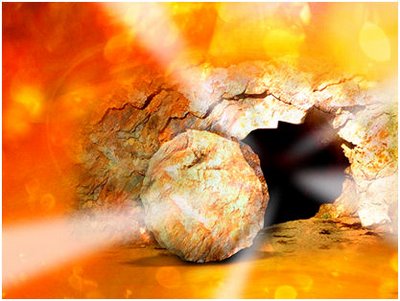
The shame of sin (bondage in Egypt) is gone!

‘Then the LORD said to Joshua, “Today I have rolled away the reproach of Egypt from you.” So the place has been called Gilgal to this day.’

The root common to the two words rolled and Gilgal is galgal, which express the notion of something round, circular or rolling. It forms the root word for Galilee, the place where the lord Jesus carried out his ministry. It consisted of visiting a circuit (galeel) of cities. This was exactly what Samuel did when he judged Israel, he went from Bethel to Gilgal to Mizpah and resided at Ramah (1Sam: 7:16).  It also forms the root for Megillah which denotes the scroll or the roll of a book, as used by Zechariah about a flying roll and in Psalm 40.

All of these ideas come together in the meaning of the root Galah, which is translated as uncovered, discovered, opened, or revealed. It is used in Isaiah 53.1 “Who hath believed our report? and to whom is the arm of the LORD revealed?” This is the Hebrew root – the root of the word Revelation – that governs the overall structure of Scripture!

Yet there is more – not only does this root express both the nature of Scripture (it is a revelation from God) and its geometric form (a wheel) it also encodes the axial theme about which this wheel of revelation revolves!

The name of the place where the Lord was crucified is the Aramaic Gulgoltha, which became Golgotha in Greek. It came from galgal through the Hebrew word for a skullgulgoluth, because of its round form.

The name of the place where the Lord was crucified, therefore, differs from the Hebrew word denoting a wheel, galgal, by the addition of two letters, the Aleph and the Tav. These are the first and last letters of the Hebrew alphabet that govern the overall structure of God’s Wheel. They correspond to the Greek Alpha and Omega, by which the Lord God identified himself.  The Hebrew Tav denotes the axis or the cross around which the wheel revolves. The two letters Aleph and Tav combine to form the word Eth which when added to galgal is an anagram of the word Golgotha; this became the centre for God’s revelation to humanity.  There is still more……..

 As you digest this morning, think about God wonderful design which all started at Gilgal.

Read the references given: Joshua 5, 1Samuel 7, Psalm 40 and Isaiah 53.

Posted by: pastorapbell | October 5, 2010

as we understand the consequences of enlisting in the army!

And you have forgotten that word of encouragement that addresses you as sons:
   “My son, do not make light of the Lord’s discipline, and do not lose heart when he rebukes you, because the Lord disciplines those he loves, and he punishes everyone he accepts as a son.“Endure hardship as discipline; God is treating you as sons. For what son is not disciplined by his father? If you are not disciplined (and everyone undergoes discipline), then you are illegitimate children and not true sons. Hebrews 12:5-8 NIV).

When Joshua set up the camp at Gilgal not everyone enlisted. Those who did not understand or could not buy into the vision stayed away or died in the wilderness. They lost their inheritance because of disobedience and or rebellion. Even though they were people of God they did not fulfil their potential or walk in their destiny. Once they were released from the clutches of the merciless Pharaoh all they did was complain, grumble and moan about the leader God had placed over them.

So we come to the camp of Gilgal. This is the place where the new generation is being trained to fight the enemy.  We fight the enemy not each other! All throughout their lives they have seen their ancestors rebel, bad mouth their leaders and disobey their God. It was now time to make a separation. It was not time to CUT AWAY THE FLESH.

The first thing that Joshua did after setting up the camp was to circumcise them, that is, he cut away the flesh. This signified that they had made a new agreement /covenant with their God.

How is this significant for us? Let me say this, unless we cut away the flesh, that is, we stop looking at things through our natural eyes, we will not be able to see where God is taking us. Let me explain what I mean. God wants to bless us bless us. He is waiting to pour out and lavish on is all that he has in store for us. However, he cannot do it because we do not have the capacity to receive it. Look at it like this, would you give a ten year old £1000 for his pocket money? Or give a mortgage to someone who has never held down a job? Similarly God will not give his blessing to those who are undisciplined or will not come under the spiritual authority of the leader he has placed over them.

Today let us ask the Lord to open our eyes and remember that discipline is learning, and as a learner you must follow the leader!

Read Joshua 5:8 & Hebrews 12:5-12.

Posted by: pastorapbell | October 4, 2010

As we reposition ourselves at Gilgal

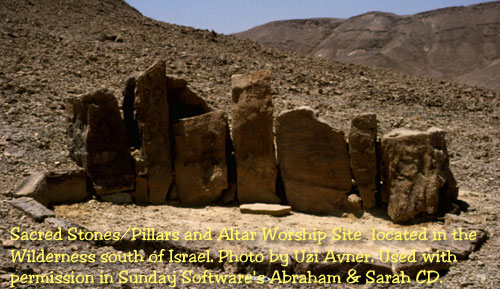
And Joshua set up at Gilgal the twelve stones they had taken out of the Jordan.  He said to the Israelites, “In the future when your descendants ask their fathers, ‘What do these stones mean?’  tell them, ‘Israel crossed the Jordan on dry ground. ‘He did this so that all the peoples of the earth might know that the hand of the LORD is powerful and so that you might fear the LORD your God forever.” (Joshua 4:20-24 NIV).

For the month of October I will be focussing on the significance of Gilgal and its relevance for us today. The first instance of Gilgal in scripture is found in Joshua 4 and is the place where he set up camp for the soldiers of Israel before they marched on Jericho to take possession of the Promised Land. He gathered twelve stones and built an altar to commemorate the greatness of God who had just parted the Jordon River so that they could cross over.

Have a memorial of the past, don't live in the past!

As the people of God, there must be a time in our lives when we cross over from the past and all the negatives that it presented to us and move onto our Gilgal. It is here that we remember the goodness of our God and recognise that it is he who gives victory to those who are obedient to his calling. Gilgal became a camp for the fighting men of Israel. And as we shall see as we dig deeper into this wonderful resource that God has given us,  training is essential for all those who want to walk into their destiny.

 No soldier who enlists in the army and is placed on the front line immediately.

 All soldiers must undertake the necessary training programmes and must be kept up to date with the latest development in weaponry.

 All soldiers must be under authority; those fighting a spiritual battle must be under spiritual authority.

Discipline is essential.

Obedience is a vital prerequisite.

It is at Gilgal that training occurs and the individual is prepared to go forward and take possession of his or her destiny. The altar reminds us that there is no going back. The river of God has washed away the past and we now look to the future trusting that God who brought us out of bondage in ‘Egypt’ will lead us on to our Promised Land.

Today the disgrace of the past has been rolled away if allow our leaders to train us!

Read Joshua 4 & 5 and research Gilgal.

« Newer Posts - Older Posts »

Categories