Posted by: pastorapbell | April 7, 2011

as we develop the gifting of the Shamar Prophet

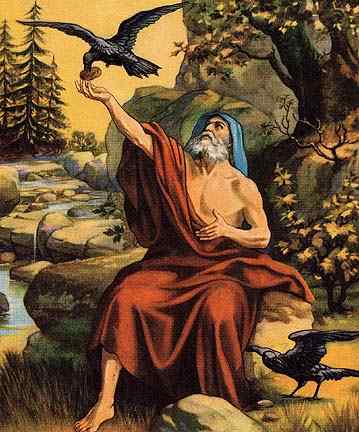
Elijah the Prophet of the Lord burst on the scene at the time when the people of God were doing their own thing and worshipping other gods. At this point in their history they had kings like other nations, lived in their own houses and were materially very comfortable. Contrary to the laws of God as given to Moses, they inter-married and rather than leading their partners to live for Yahweh they embraced their gods. This situation is rather like that in Britain today. Rather than lifting up the name of Jesus the saviour of the world, we are embarking on the notion of a multi-faith nation to appease those who serve other gods and have great wealth. The challenge for Elijah was this: King Ahab was completely under the spell of his queen Jezebel and she was an ardent worshipper of Baal, the god of food, fertility, rain and so on. So moved by the Holy Spirit, Elijah spoke the prophetic word to Ahab, that until he commanded the rain to come there would be a drought in the land.  This was a direct challenge to his new god who was supposed to be the god of rain. Elijah was able to speak the words of Yahweh to Ahab because he spent time hearing from God and time in His presence. As we will see, Elijah will face many challenges, but his ability to speak what he has heard allowed him to perform many mighty deeds in the name of the one true God, Yahweh. Today, although we live in a multi-cultural, multi-faith society, let us listen to the voice of our God so that we can speak to those in power to turn this country back towards the creator of the universe, Jesus the saviour of humanity. We need the prophets of the Lord to arise for such a time as this. Read 1Kings 17:1-7.

Posted by: pastorapbell | April 6, 2011

as we mitigate against abuse of the gift

To develop a prophetic anointing the individual has to learn from a mentor and have their own personal relationship with Lord. There are safeguards that every budding prophet must mitigate against. It is easy to succumb to the whims and wishes of interested parties particularly if they are wealthy and become benefactor. I will use two characters from scripture to highlight this problem. In the first instance we see a prophet called Balaam who is given this gift by God. However he is asked to use his gift to curse God’s people (Numbers 22:5ff) in return for financial remuneration. He was nearly killed by an angel of the Lord because of the abuse of his gift. On the contrary we see in 2Kings 5 another prophet, Elisha who was approached by a commanding officer of a foreign army to be healed of his leprosy. After speaking the word of God to him and effecting his healing, the officer wanted to pay him and give him gifts. Because of his desire to stay neutral, he refused his presents. He recognised that when God gives a gift, it is to be used wisely or else it can be abused even if the motives of the recipient is honourable, we are told to avoid the very appearance of evil (1 Thessalonians 5:22KJV). In this story the servant of the prophet, i.e. the trainee prophet takes the money and merchandise from the commander thinking he could fool the prophet and keep it for himself. The prophet knew what was going on and declares that the disease of leprosy which the commander was cured of would affect him and his descendants continually, which occurred as declared by the prophet(2 Kings 5:19-27).

Today, although we are encouraged by the apostle Paul to desire to prophesy, when we do, remember that our integrity is worth more than our gifts. To be a truly influential prophet we must be reliable, honest and have integrity, else the words we speak can come back to haunt us.  Read Numbers 22 & 2kings 5.

Posted by: pastorapbell | April 5, 2011

as we receive the prophets anointing by association

Who we associate with dictates what sort of spirit we inherit. Those we associate with have a massive influence on us. They affect our attitude, our mannerisms and our future. To develop a prophetic gift we need to associate with a prophet. Moses was instructed by God to gather the 70 elders together so that God cold take some of the anointing from him and place it on the elders. This spiritual transference is first tangible evidence in scripture that transference by association is a means of spirits going from one generation to another.  Although the Patriarchs gave us the practice of passing the blessing onto their children by placing their hands on their heads and blessing them, their spirits were never expressively passed on to those associating with them.  The people who were chosen to associate with Moses were recipient of some of the anointing on Moses. His spirit would live on in them and some of them like Joshua would achieve great things as directed by God.

This development by association is carried on through scripture and Moses enshrined it in the first commandments given by God; if you worship other gods then you will be punished and this curse will flow down to your children, grandchildren and great-grandchildren (Exodus 20:6).  On the contrary if you obey the Lord’s commands, the blessing derived from that will flow down from you to a thousand generations. i.e. the blessings will be never ending.

The anointing of association is still relevant today. Many of the great preachers and modern day prophets associated with a mentor who had the gifting they desired. We are encouraged to desire spiritual gifts (1cor 12) but we must be sensitive in the use of our gifting. With great blessings comes great responsibility so whatever gift God has given you remember to use it for his glory and not your own.   Read Numbers 11.

Posted by: pastorapbell | April 4, 2011

as we develop traits of the Prophetic anointing

Moses grew up in the Royal Court in Egypt and was versed in all the poetry, science and building expertise of that country. However he was selected by God to be a deliverer before he was born. As a precocious young man he had the world at his feet. When he found out his real identity his whole world changed and his passion to help his people increased. He was destined to be a prophet in spite of his perceived shortcoming. To be used by God he had to be delivered first from the Egyptian culture and learn the language of humility. He was called by God as the meekest man on the earth (Numbers 12:3) after he spent 40 years as a shepherd looking after someone else’s sheep.

Here are some traits of a true prophet:

  1. Whatever predictions a true prophet makes come to pass. They do not speak about themselves but speak as the Lord reveals things to them in dreams and visions. If a prophet declares a thing and it does not come to pass then there are false prophets (Deut. 18:15-22)
  2. A true prophet receives dreams and visions from the Lord. The Lord makes himself known to his prophet and he knows who are his and therefore can speak on his behalf (Numbers 12:6). However with Moses the deliverer as it will be with Jesus, God spoke to them face to face.
  3. A prophet is someone who hears and understands what God is saying now and can relay it to the people of God. They can be male of female. God is not gender specific but speaks to people who are available.

Prophets are human beings and as such can have personality traits which are not desirable.  Moses was an intelligent man who was taught in the best university in Egypt. However when God commissioned him to go to command Pharaoh to let the Israelites go, he angered God by saying that he was slow of speech and gets tongue tied (Exodus 4:10). The Lord showed his power to Moses and used him as a great deliverer and the person who wrote the Torah which is the rule by which God’s people still live. Prophets have faults but they are available to be used by God. Today are you available to allow your prophetic anointing to develop? Read Exodus 4.

Posted by: pastorapbell | April 2, 2011

as Moses shows us things that must come to pass

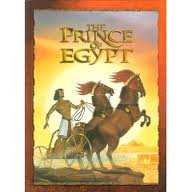
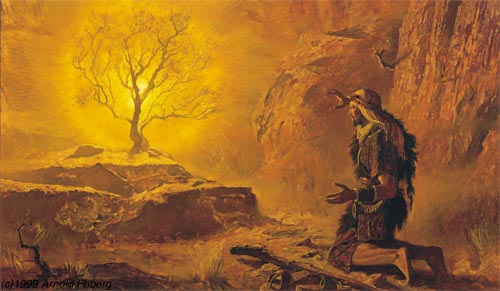
The Old Testament figure of Moses stands large in biblical history. Moses was a fore-shadow of the Messiah, one who would deliver all those who put their faith and trust in him. Like Jesus, he was regarded as a future king; he was brought up and educated by the royal family of Egypt; he was a prophet in that God spoke directly to him and was also a priest; he presented the needs of the people to God. Moses was the first and the last until Jesus, to occupy these three offices. The similarities between the life of Moses and that of Jesus the Messiah are striking: The ruling monarch at their time of birth tried to wipe them out (Exodus 1:22, Matthew 2:16). As infants they found refuge in Egypt to escape death. Moses grew up in the palace of Pharaoh and for 40 years was considered as a prince of Egypt. They both had a personal relationship with God. He spoke audibly and visibly to Moses in the wilderness in the burning bush experience (Exodus 3:2ff) and led Jesus into the wilderness to be tempted of the devil who quoted extensively from the books of Moses (Matthew 4). It was through this wilderness experience that Moses’ life was transformed by being a shepherd to dumb animals which would be a precursor to his leading the Israelites for 40 years towards the Promise Land of God. Today whatever God has called us to be let us develop our prophetic gifting so that he can speak directly to us to be effective in our circle of influence. Remember Jesus the Messiah had given us the gifts, so let us develop and use them for his glory.

Read Exodus 3 and Mathew 4.

Posted by: pastorapbell | April 1, 2011

as we investigate the prophet and his role and function

Having followed Nehemiah in the quest to rebuild the walls of Jerusalem so that the people of God could worship and live in peace and safety, this month we will turn to look at the prophets of Yahweh to see if what they said came to pass or will come to pass in our day.

I am aware that this topic is huge and that there are many takes on it. Therefore I will only be looking at some of the pertinent themes to see if they have any relevance to us today in the light of the various occurrences happening around the globe.

Throughout the history of Israel the position of the prophet was crucial. This person was someone that God spoke directly to, either to warn the people of impending danger or to alert them to as to what they needed to do to get back on track. Invariably they went their own way and ended up being alienated from God and eventually being dispersed all around the world. The position of prophet was still an important part of God’s plan and we can see that when Jesus the Messiah came, about 2000 years after Abraham, the three posts; prophet, priest and king, implemented by God to lead his people were all occupied by him. When the New Testament church was instituted, one of the five ministry gifts that Jesus gave to set up and run the church was that of prophet (Ephesians 4:11ff). So although the setting has changed, i.e. the people of God have moved away from a specific nation to encompass the whole world [the kingdom] the role of someone who God spoke directly to was still relevant. So when Jesus taught his followers to pray ‘your kingdom come your will be done on earth as it is on heaven’ he was implementing the universal kingdom that would last forever.  Over the next month we will be looking at the role of the prophet then and now and finding out how it impacts our world today. Read Ezekiel 36.

Posted by: pastorapbell | March 31, 2011

as we examine the faith of the faithful

As we come to the end of the month let us reflect on the things we have learned from Nehemiah and his fellow workers. Firstly we understand that everyone involved in the project has a role to play. The people who were travelling to and from Jerusalem must also have been concerned about the state of the city. Concern however does not solve the problems nor do they give strategies. We can be concerned about a particular situation but never be able to do anything about it until we exercise our faith. Nehemiah believed that he could do something about it and that God had placed him in the job he was doing so that He [God] could fulfil his purposes. Although Nehemiah worked as a humble servant of the king, he did not think of less of himself, he just thought of himself less. Therefore he was able to attract favour to fulfil God’s purposes. One of Nehemiah’s key traits was his faithfulness. He was an exile in a foreign land working as a servant to the king, but he applied himself and did the best job he could. So much so that when his countenance changed the king acted. Faith works for those who will exercise it. We are reminded that without faith it is impossible to please God and that all things will work for the good to those who love God and are called according to his purposes. Faith is the substance of things hoped for the evidence of things not seen. Today believe that you will see what God has promised you and you will.

Skim read the whole of Nehemiah in one sitting.

Posted by: pastorapbell | March 30, 2011

as we understand that God uses fools to confound the wise

One of the major themes of the book of Nehemiah for me is this: God uses ordinary men and women to fulfil his purposes in the earth. Nehemiah was an ordinary civil servant whose spirit was stirred up when he heard the news about his beloved city, Jerusalem. Once we recognise that there is a greater power than ourselves and that this power is outside of our control we can yield to it. We know that this power is not an ‘it’ but is the almighty God, Yahweh. We also know that he appeared to us in human form as Jesus the anointed one, the Messiah. We have also learned from Nehemiah and Ezra that when we confess our faults, seek him in prayer, fasting and obeisance he make ways that were not seemingly possible before. We also get to understand that favour is not fair but ‘sure is good’. Another important lesson that we learned is this, whenever God has put something in our hearts to do as soon as we take the first step of faith, we are faced with opposition. For Nehemiah he had the diabolical trinity of Sanballat, Tobiah and Geshem the Arab opposing him. Tobiah even rented a room in the temple while Nehemiah was away to find out what was going on and to stop the prayer, praise and worship to God going up.

Today, we are also faced with a trinity of opposition. They are; the ‘world’, the ‘flesh’ and the ‘devil’. And like our ancestors of faith, we must fight them with the spiritual tools we have been given. If you don’t know what the spiritual weapons we have are, then here is a starter: The Name of Jesus, The blood of Jesus, the armour of God (Eph.6:10ff), corporate prayer and praise and worship. As we use our spiritual weapons we will rebuild all the broken walls and re-institute God’s divine order. Read the prayer in Nehemiah 1:5-11; and 9:5b-37.

For any task to be completed successfully there must be passion in those who are undertaking the task. This passion is only aroused when the individual understand the condition to which they are called are prepared to do something about it. Throughout scripture those who managed to change anything were the ones who responded to the call. The call and response matrix is still relevant today. Nehemiah heard about the situation [the vision] from his people who had visited the holy city [the call].  And although his life was pretty comfortable, he responded to the call, put his career on hold and went to God in prayer and fasting to be directed in the right way to go (1:4) [the response]. With the call from God playing on his mind, he mused about what he could do.  However, he still went about his daily task of tasting the wine before the officials drank, to avoid the possibility of the nobles being poisoned. Passion always shines through and the king saw the sadness in Nehemiah’s eyes and asked what was wrong (2:2) [the provision]. God had given Nehemiah the green light and gave him the rubber stamp from the highest authority in the land, the king. The king gave him leave to go and do what God had put in his heart and told him that when he returned his job was safe. He did not take unpaid holidays, nor did he resign from his position without consultation, the Lord provided the opportunity for him to tell his story and gave him the favour of the king.  Wisdom says this; ‘the heart of the king is like a stream of water in the hand of the Lord; he turns it wherever he wills’ (Proverbs 21:1).  And our sage continues: ‘Your gift will make rooms for you and will bring you in the presence of the great’ (Proverbs 18:16). Nehemiah faced opposition but within a month of being in Jerusalem he had rebuilt half the wall and sealed up all the holes. He achieved this because the people he went to had a mind to work, and to work together (Ch 4:6b). Today, let us seek God for the passion to change ‘things’ in our society. God could have you in Parliament so that you can change unjust laws, like Wilberforce, or lead freedom marches against injustice and racism like Martin Luther King Jr. Whatever God has placed on your heart to do, the first thing that is required is his mind on the matter. So seek him in fasting and prayer and he will give you the strategy. A God idea will always succeed. Read Proverbs 18:1-24.

Posted by: pastorapbell | March 28, 2011

as we follow the leading of the Lord

From the day the Nehemiah heard about the dilapidation of the walls surrounding the city of God, it was in his heart to do something about it. He was moved by the news that things were not right, his people were in captivity and the dwelling place of God was a laughing stock. Like us today, Nehemiah knew that the God he had served from his youth was “gracious and merciful, slow to anger and abounding in steadfast love” (Psalm 145:8). And this knowledge of Yahweh, the God of Israel, compelled him to do something about his situation and bring transformation to a nation. Once an individual understands that God is almighty he can say like the psalmist; “I bow down toward your holy temple and give thanks to your name for your steadfast love and your faithfulness; for you have exalted your name and your word above everything” (Psalm 138:2). Today, God will bring you into the presence of people who will have the resources and ability to allow you to fulfil the plans that he placed in your heart. And like our friend Nehemiah we will develop the passion, resolve and drive to complete the task he has set before us. And although it might be an uphill struggle, let us never forget that our God is more than able.  Read Psalm 138.

« Newer Posts - Older Posts »

Categories