The Lord bless you and make his face to shine upon you and give you his peace. This is a well known pronouncement among those of us who are seeking to portray God’s grace to those in our community. But we need to step back and ask a few pertinent questions.

What does the word “blessing” mean and how does God bless us? And what does He blesses us with?
How do we get these blessings, and how do we make use of them? And finally how can we be a blessing to others?


This concept of “blessing” in the Bible is Hebrew in origin and is derived from the OT Hebrew word (baw-rahk’), which means “to kneel”, and was used to convey the meaning of respect or adoration. You would kneel before a king in respect or to offer thanks for something or some favour received.  It goes without saying that you would kneel before God in adoration, praise, thanksgiving, supplication for the things he has done in your life.

Translators tried to find a word that would convey the notion of God’s favour. There was no word in the Greek language that could achieve this. So the word “bless” was not a literal translation, but had religious overtones. Our English word Bless is derived from a German word (bletsian) which loosely means to smear with blood. The translators used it even though it had come from a heathen source.
So there was a long and varied series of associations: Jewish, heathen and Christian which when blended together gives us the English use of the word “bless”.

Therefore  “blessing” is a word which has a position in Christian vocabulary by reason of long-standing usage. But it does not directly translate the Greek word (eulogeitos)!

The word benediction is derived from the Spanish bendito from which we derived the word benediction which literally means “to say good things or good words”.

The word “blessing” then recognizes the existence and deity of God. It tells us that we can be aware of His existence and have inner happiness because of who and what He is. It also tell us, that God was thinking about us in favourable terms and that He had a mental attitude of love, grace, and mercy toward us from before the beginning of time.

Praise, or blessing, for anyone comes from a mental attitude of love and appreciation for that person. God makes an initial move toward us because of His mental attitude of love. He provides us His graciousness, His gift of salvation, His spiritual gifts, all of which are manifestations of His love for us. He thought “good words” toward us before we were conceived.

He has provided all blessings for us as an expression of His love. Our response of blessing or praise toward God, and toward others, is a response from a mental attitude of appreciation. The favour that is achieved is passed from us unto the next generation. This was God’s intention, carried out by those who knew him and made available to all by the shedding of the blood of Jesus. Today if this blood is smeared over you, you are indeed blessed. Read Deuteronomy 28.

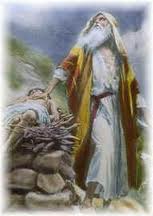
God always keeps his promises. When God made his promises to Abraham it seemed to him that they would not be fulfilled in his lifetime and to give God a helping hand he had a child with his Egyptian helper Hagar. However, as we later discovered, God does not need our help. He is God all by himself and will fulfil every single promise he has ever made. He said to Abraham, I will make you a great nation (Gen 12:2), today the descendants of Abraham run and administer the greatest nation on the planet.  I will bless you and make your name great so that you will be a blessing (Gen 12:2b). Abraham was a blessing to all those he associated with and today his descendants are still a blessing. I will bless those who bless you and curse those who curse you and in you all the families of the earth will be blessed (Gen 12:3). Abraham experienced all these blessings in his lifetime and so did his immediate descendants and so do all those who now put their trust in the Lord Jesus Christ!

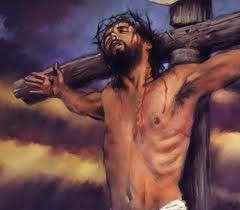
How is this possible you may ask? Well whatever God says he will do will happen. He blessed Abraham so that he and his descendants may show to the whole world the favour of our almighty God. The blessings of Abraham were intended for his descendants, i.e. those descended from the lineage of Isaac and Ishmael. Although some may argue that because Ishmael was an illegitimate son he is exempt from the blessings. Others, particularly the followers of Islam, argue that since Ishmael was the first born son of Abraham, he is the rightful heir. All these argument are superseded by the advent of Jesus. To receive a blessing one must reverse any curses that were working in opposition to the blessing. The descendants of Abraham failed miserably to show the power of God (the power of love) to those around them. They even betrayed God and worshipped idols like their neighbours. It took the advent of the son of God, Jesus, to shed his blood to reverse the curse. So it is written in scripture, cursed is everyone who dies on a tree(Gal 3:13), and by dying on the cross Christ redeemed all who put their faith in him from the curse of the law and gives us access to the Spirit of God through faith in him. So all those who put their faith in Jesus can have access to all the promises of Abraham and more because of what Jesus did on the cross. We are heirs and we did not have to work for it, just exercise our faith.

Read Genesis 12 and Galatians 3

Posted by: pastorapbell | June 29, 2011

as we learn the art of repentance from the Ninevites

Who in your opinion was worst offender, Jonah or the Ninevites? Jonah was sent by God to warn a city that was totally depraved. They were totally dismissive of God and anything that He doing in the here and now. They lived for themselves, worshipped who or what they wanted and believed that the whole world revolved around them and their needs. Sounds familiar? However when they heard the words ‘repent before destruction come’, ‘turn away from your wicked ways’ and ‘confess your sins to God’ they obeyed and even went as far as putting ashes on their heads as a sign of contrition.

On the other hand we have Jonah, a prophet of the Lord who knew of the attributes of God. He knew that it was his God who made heaven and earth. He knew that his God is a jealous God and when necessary will fight for those who put their trust in him. Jonah heard clear instructions from the Lord but chose to disobey him and go off in the completely opposite direction. It took the tragedy of being sacrificed by his fellow passengers for him to get his ministry back on line. In your opinion who obeyed God? Jesus said the people of Nineveh will rise up at the judgement and condemn this generation, because they repented (Luke 11:32). Can our generation be compared to the Ninevites?

Read Proverbs 18.

Posted by: pastorapbell | June 28, 2011

as we ask the question, what sort of God do you serve?

It was when Jonah disobeyed the instructions given by the Lord that He (the Lord God) hurled a great wind on the route that he had chosen for his escape. And even when he was discarded by his fellow travellers because of the raging winds and storms that besieged the ship it was the same Lord who provided a path for his rescue. Like the father of the prodigal son, the Lord restored Jonah and gave him another chance, but only after he had come to his senses and repented. It took the wrath of God to overcome the spirit of disobedience which is the default mode for most individuals. Although God is a merciful God who is full of love and slow to anger, God is also a God of wrath. This wrath of God is finely balanced with his love. From scripture we see the He is prepared to forgive us and to give us chance after chance. However, there comes a point when God will act and do so without fear or favour. We serve a God who is loving and kind, but he is also a God of justice and fairness. Our God is not a namby-pamby benign God who cannot see or hear. Our God sees, hears and understand how we feel. Jonah felt both the love and the wrath of God and so will anyone who walks in disobedience. Today remember that God is a God of love but he is also a God of wrath!

Read Romans 1:18-32

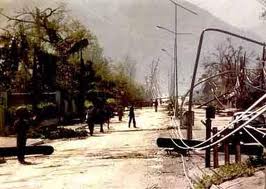
When the storms of life starts to rage what will you do? It is in the stormy seasons that our true characteristics come through. Growing up in the tropics we knew that there was a rainy season and that during this time there was the possibility of storms, flooding and unsecured buildings being washed away. In 1988 hurricane Gilbert was so severe in Jamaica that lyricists wrote many songs about the ravages of Gilbert and the fact that he came unexpectedly and took away people’s satellite dishes and removed their roofs of their houses to leave them exposed. My mother used to say to us, ‘yu don’t know what is in fish belly ‘till you step on im’. It is not until an individual is placed in a position of high pressure that you see their true character. Some will wilt under pressure and others will strive. The greatness of Winston Churchill did not emerge until Britain was facing certain defeat by the Nazi during the Second World War. When the storms hit the ship where Jonah was hiding, he was fast asleep. He was in the hold in a deep sleep unaware of what was going on around him. It seems to me that there are many people who are followers of Jesus but are unaware of what is going on around them. Today we have many of our young people who are succumbing to the prevalent culture by dropping out of school, having children they can’t care for and ending up at the mercy of the welfare system. Like Jonah these are the people who cannot weather the storms of live. Whilst they are going through the storms they are totally unaware of the real after effects. It was to these people that Jonah was sent. These People who did not know their right hand from their left hand, they were effectively walking around like zombies. Do we operate like Jonah, go to sleep and be completely oblivious to what is going on around us? or do we allow the Lord Jesus to walk through the storm with us? This choice should be a no-brainer!  We will face storms, we will face challenges but when we invite Christ in all our circumstances, we can face any and every storm with confidence.

Read Luke 8:22-25.

Isn’t it interesting that Jonah knew he done wrong when the ship he boarded at Joppa was threatened by a raging storm but was reticent about the fact that God would save the Ninevites from total annihilation. When he was questioned by his fellow travellers he quickly owned up that he was the cause of the storm and that the only way to solve the problem was to jettison him. At no point in his story does Jonah display that he has a change of heart. It is not until circumstances force his hand that Jonah responds. It is against this sort of mindset that Jesus appeals. The eye for an eye brigade who always wants to see their enemies destroyed. Imagine how awed Jesus hearers must have been when faced with fact that their oppressors for years would be destroyed by the coming Messiah. However, this Jesus whom they now accepted as the Messiah was telling them to turn the other cheek, give to those who take from you and love those who despitefully use you (Matthew 5:38ff). The Jonah mindset is still prevalent among us. They follow the Messiah but cannot live next door to someone who is different from them. This religious stance is exemplified by Philip Yancy in his book ‘what so amazing about grace’. Here is relays that fact that as a Southern Baptist in America in the 60s, the fellowship he belonged to were sending  missionaries to Africa but would not allow Black people to become a part of their fellowship. We can be religious followers of the Messiah without being able to understand the full extent of his message. We can ask to be sacrificed like Jonah to save our fellow travellers but still have hatred in our hearts for those who have wronged our people over the years. Today we still have people from the Black community who are still blaming their failings on the ‘white man’. They will never fulfil their potential until they recognise that all men have the image of God as part of their innate make up.  It is a fact that all people group have as part of their history a creation narrative.  Imbedded in all of us is seeds of justice and righteousness, but for this to grow we must learn to become fully human. That is to become a person who works against systems and not people; someone who embraces their own identity without undermining others; Someone who love others because they have learned to first love themselves.  It was because of God’s grace that Jonah was allowed to live to tell his story, and similarly we have the ability to be carriers of His glory, because of His Grace. That is, God’s Riches At Christ’s Expense.

Read Matthew 6.

Posted by: pastorapbell | June 22, 2011

as we overcome evil with love

Hatred causes the feud to continue as generation after generation seeks retribution and a sense of justice. Jonah typifies the reaction to God’s redeeming, transforming and restorative love. He wanted self gratification and the notoriety that can boast about the 120,000 people that “I” destroyed. On the other hand Jesus teaches us to die to self and forgive those who despitefully use us, love those who plot against us and keep on loving even in the face of a wall of hatred. There is no mileage in continued hatred it only ends when we confront it with perfect love. Loving those who hate you is hard, but this is the love that God showed us. It was unconditional, uncompromising love that looks beyond the faults of the individual and sees their need. This was the kind of love that Jesus spoke about, loving someone because deep down in their spirit they bear the image of God. This is how martin Luther King Junior put it: “When the opportunity presents itself for you to defeat your enemy that is the time which you must not do it. There will come a time, in many instances, when the person who hates you most, the person who has misused you most, the person who has gossiped about you most, the person who has spread false rumours about you most, there will come a time when you will have an opportunity to defeat that person. It might be in terms of a recommendation for a job; it might be in terms of helping that person to make some move in life. That’s the time you must not do it. That is the meaning of love. In the final analysis, love is not this sentimental something that we talk about. It’s not merely an emotional something. Love is creative, understanding goodwill for all men. It is the refusal to defeat any individual. When you rise to the level of love, of its great beauty and power, you seek only to defeat evil systems. Individuals who happen to be caught up in that system, you love, but you seek to defeat the system.” There are people today who will die so that love can have the opportunity to continue to transform and re-order lives. So today try to see the God in those who hate you rather than seeking to get even with them.  Unlike Jonah, don’t cry that your enemies didn’t get zapped; rejoice that they will be saved!

Read the beautiful attitude in Matthew 5

Posted by: pastorapbell | June 21, 2011

as we love sinner and hate the sin

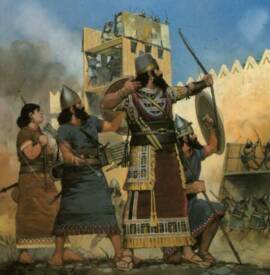
The Assyrians were fierce enemies of Israel and Jonah knew this. The capital of the Assyrian empire was Nineveh and it was to this city that Jonah was sent to warn to people and encourage them to repent. It was no wonder that Jonah ended up going in the direction towards Tarshish so that God could deal with the people who were a constant threat to the Israelites. Jonah’s actions were quite typical. The average person would want to see their enemy destroyed and Jonah was no different. Like all the Israelites, he hated the Assyrians. They were powerful and ruthless and would eventually make Israel a vassal state of theirs. So when he received the call to warn them about the impending destruction he was understandably in a quandary about what to do. How do you react when you are told to face your enemies to try to bring restoration to a situation? How far should we go in trying to be peace makers? Jonah got it woefully wrong. Although he eventually went to Nineveh to warn the people, he was very sad that they repented and were not destroyed. Jesus tells us that we should love our enemies and pray for those who persecute us (Matt 5:43-48). This is very difficult in reality and shows great spiritual maturity when we are able to do this. Recently the President of the United States of America ordered his special agents to kill the renowned terrorist Osama Bin Laden. Osama was a thorn in the side of America for well over a decade and was apparently responsible for blowing up the twin towers. So when the news was released that he was dead, people went onto the streets in America and celebrated.  I believe Jonah would have celebrated like those people from America, but what would Jesus have done? Jesus went on to say in Matthew 5:45 “the father makes the rain fall on the just and the unjust” and so he will enact judgement in his time. So although it may be difficult, pray for your enemies, bless them and allow God to exact his judgement.

Read Matthew 5:38-48 and allow love to overcome hatred.

Posted by: pastorapbell | June 17, 2011

as we chose to juxtapose our knowing against the all knowing!

Today I want to explore the emotions we go through when we are placed in difficult situations. Whilst Jonah was going about his daily life we heard nothing of him nor did we know that he was called of God. So why is his short story placed in the canon of the bible? It would appear that it is there to teach us some very important lessons.

Firstly we are not to be defined by our feelings and sometimes we have to experience the feelings of total abandonment for our faith level to rise above the ordinary.  Secondly because God is outside of time, however long it takes for the penny to drop, he will wait for us. Because God is patient, longsuffering and gracious, we can sometime take liberties. For Jonah this meant going completely against what he was commanded to do. Although we know that our God is all knowing and all seeing we still try to act smart and pretend that we don’t know what time of day it is. Jonah was instructed to ‘go at once to Nineveh and warn the people.’  He knew that Yahweh is gracious and compassionate, slow to anger and abounding is steadfast love (Psalm 145:8), so he felt that he had time on his hands. He may have been anxious about the whole situation and in his anxiety felt that he could not deliver the message of destruction to ignorant people. Perhaps mingled with this anxiety was fear, trepidation and grave sadness that the whole inhabitants of Nineveh would be destroyed. His actions are very typical of an un-regenerated person. His emotions were leading him and as a consequence his faith went out of the window along with his knowledge of the greatness of Yahweh. When we are being led by how we feel, we seldom make the right decisions or chose the right path. Emotions have no intelligence and as such will always allow us to make the wrong decisions.

Our feelings are subject to our environment, so if the weather is nice and sun is shining, we tend to be upbeat. Whereas if the sky is overcast and it is raining, we typically feel a bit down in the dumps.

Jonah’s wake-up call was him dying to his selfishness. Spending three days and nights in the belly of a fish allowed him time to reflect and to refocus on who he really was. Perhaps all of us need some time away from our familiar surroundings to get in touch with out true selves so that we can reconnect with the all-knowing all-seeing all-powerful God who called and equipped us to relay his message of hope to our dying generation. What would you do? How do you react when you hear the call?  It is easy to feel anxious, angry, sad, elated or non-plus but allow you faith in the one who is above all our emotions to rise and you will see the great things that he will do.

Read Proverbs 21 and allow the Lord to weigh your heart.

Posted by: pastorapbell | June 15, 2011

as we answer the call

All of us face storms in our lives and we can either go through them or succumb to them. When Jonah faced his storm he knew the reason why it came. He was mandated by God to do a task but chose to go in the opposite direction. This act of defiance and disobedience almost led to the destruction of all those who were associated with him. Sometimes we are unaware of the impact the decision we take have on those around us. We can make plans and do things for selfish reasons with scant regard for the feelings and safety of those around us. And so it was with Jonah. When he boarded the ship he had no idea that he was putting the lives of all those on board in jeopardy. He was just looking out for himself and looking after his own interest. When we act selfishly, we often put on blinkers and tend to push ahead regardless of what we are hearing to the contrary. With this mindset we can walk into storms without realising it and end up being the catalyst for potential destruction.  How can we mitigate against this seemingly selfish trait? Like Jonah I believe we need to be open and honest. Who is the real you? What are you mandated to do? And how are you going about doing what you have been called to do?

These are hard questions but require honest reflective answers. So today if you want to avoid the storms of life, find out from God what he is asking you to do and do it. He will provide the right people and resources to help you to fulfil your destined call.  Read Isaiah 65

« Newer Posts - Older Posts »

Categories