Introduction
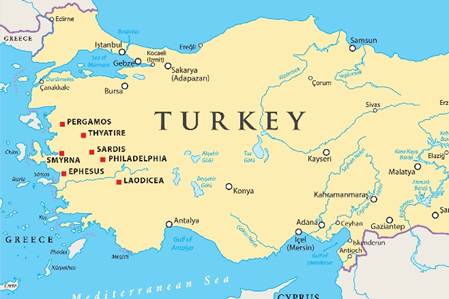
The seven churches addressed in the Book of Book of Revelation: Ephesus, Smyrna, Pergamum, Thyatira, Sardis, Philadelphia, and Laodicea, have long been understood not only as historical congregations in Asia Minor, modern day Turkey, but also as symbolic representations of successive eras in church history. When we consider the meanings of their names alongside the proposed historical periods they correspond to, a compelling narrative emerges, one that traces the spiritual journey of the Church from its birth to its present condition. More importantly, this framework offers insight into where we are now and the challenges facing the modern Church.
A critical dimension of this historical journey is the lasting impact of the intermingling of church and state, particularly during the period associated with Pergamum and later solidified in Thyatira.
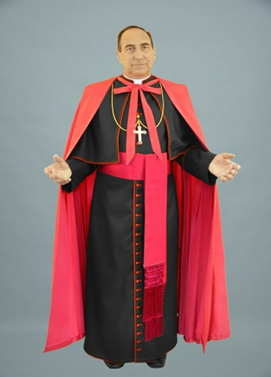
One of the most visible expressions of this development was the sacralisation of vestments, the elevation of religious clothing as a marker of authority, status, and spiritual distinction. Clergy were increasingly set apart not only by calling but by outward appearance, adorned in garments designed to be recognized from a distance; indeed, the Roman Catholic clergy were required to be celibate, i.e. remain single, since they were considered married to the Church, contra to the Book of Genesis 2, which the Gospel of Mark 10 records Jesus referring to, in affirming the union of man and woman. While originally intended to convey order and reverence, this emphasis on external form often overshadowed inward transformation. Significantly, this influence did not end with the medieval church; it carried forward into many denominations that emerged after the Reformation of 1517. Despite efforts to recover doctrinal purity, vestiges of these practices remained embedded in ecclesiastical structures, shaping how leadership and holiness were perceived across traditions.
It must also be stated clearly that the Anglican Communion, though often grouped among Protestant bodies, did not arise as part of the theological movement of reform in the same way as other Reformation traditions. Rather, its origin is tied to the political and personal actions of Henry VIII, who separated from the Roman Catholic Church primarily to secure a divorce from his Spanish wife, Catherine of Aragon. Although the Anglican tradition would later develop its own theological identity, it retained many structural and liturgical elements of the Roman Catholic system, including aspects of clerical vesture and ceremony. This historical reality underscores the complexity of the Reformation era and highlights how institutional continuity often coexisted with claims of renewal.
Ephesus, meaning “desired” or “first,” is often associated with the apostolic age (34 AD–100 AD). This was the era immediately following Christ’s resurrection and ascension, when the Church was vibrant, passionate, and grounded in the teachings of the apostles. It was a time of doctrinal purity and spiritual fervour. However, even in this early stage, there was a warning: the danger of losing one’s “first love.” This tension between zeal and decline sets the tone for the entire historical progression.
Smyrna, meaning “myrrh” or “bitterness,” corresponds to the age of persecution (100 AD–313 AD). Myrrh, a substance used in burial, symbolizes suffering and death. During this period, Christians faced intense persecution under the Roman Empire. Particularly under the emperor Diocletian from 303–313 AD, fulfilling the ten “days” of tribulation spoken of by Jesus., Yet through suffering, the Church was refined and strengthened. The faith of believers during this era remains a powerful example today, especially in parts of the world where persecution persists.
Pergamum, meaning “marriage” or “high tower,” represents the age of church and state intermingling (313 AD–590 AD), beginning with the conversion of Constantine the Great and the Edict of Milan. Christianity moved from the margins to the centre of political power. While this brought stability and influence, it also led to compromise. The “marriage” between church and state introduced tensions that would shape Christian history for centuries, raising enduring questions about the relationship between faith and political authority.
Thyatira, meaning “perpetual sacrifice,” is linked to the age of corruption (590 AD–1517), often associated with the rise of institutionalized practices and doctrines that many later reformers would challenge. Beginning with figures like Pope Gregory I, this era saw the consolidation of ecclesiastical power but also the proliferation of practices viewed by critics as distortions of original Christian teaching. The idea of “perpetual sacrifice” reflects theological developments that emphasized ongoing ritual over the once-for-all sacrifice of Christ, leading to widespread calls for reform.
Sardis, meaning “those escaping,” corresponds to the age of the Reformation (1517–1750), initiated by figures such as Martin Luther. This period was marked by a dramatic break from established traditions, as reformers sought to recover biblical truth and spiritual vitality. Sola Scriptura, which is Latin for scripture alone, teaches that the Bible is the highest and ultimate authority for Christian faith and practice. Scripture is fully sufficient for teaching truth. It stands above church traditions, councils, or leaders and all doctrines must be tested against the Bible
However, the name Sardis also suggests that while many escaped corruption, not all experienced true spiritual renewal. It was a time of both liberation and fragmentation.
It is also crucial to recognize that the roots of one of the most devastating global systems, the Trans-Atlantic Slave Trade, emerged within the broader context of this transitional period. During the 1450s, papal edicts issued under authorities such as Pope Nicholas V granted Portugal the right to explore and trade along the West African coast, including the authority to subjugate captured peoples into forced labour and enslavement. From the 1490s onward, this system expanded into a vast transatlantic enterprise in which millions of West Africans were forcibly transported across the ocean to the Americas. There, they endured generations of brutal servitude on plantations. This trade continued until its abolition in the British Empire in 1807, with slavery itself formally abolished in British colonies between 1834 and 1838.
This historical reality exposes a profound contradiction within the Church’s history: even as reform movements sought to restore spiritual truth, systems of exploitation and injustice were being sanctioned and perpetuated. It highlights the sobering truth that institutional reform does not always equate to moral or spiritual renewal on every level.
Philadelphia, meaning “brotherly love,” represents the age of mission (1750–1906). This era saw the rise of global evangelism and missionary movements, driven by a renewed emphasis on unity and love among believers. Organizations and individuals carried the Christian message across continents, embodying the spirit of Philadelphia through cooperation and shared purpose. This period laid the groundwork for the global Church we see today.
However, although the spirit of evangelism was evident in society, it must be acknowledged that virtually none of the reformed churches consistently critiqued or campaigned against slavery during much of this period. Indeed, many Christians justified slavery, and some were directly involved in its practice. Thomas Jefferson, one of the authors of the United States Declaration of Independence, not only owned enslaved people but also fathered children with women he enslaved.
Similarly, the institutional Church itself was not exempt from complicity. The missionary arm of the Church of England, the Society for the Propagation of the Gospel in Foreign Parts (SPG), received a bequest from Christopher Codrington in 1710 and subsequently owned over 300 enslaved Africans on plantations in the Caribbean. These individuals were subjected to harsh conditions, and, in some cases, were even branded with the word “Society.” Today, the Codrington estate has been transformed into Codrington College, an institution for training Anglican clergy.
This contradiction within the Philadelphia period reveals that even in an age characterized by “brotherly love” and missionary zeal, profound moral blind spots remained. The Church’s failure to universally confront the injustice of slavery stands as a sobering reminder that spiritual enthusiasm does not always translate into social righteousness. This inaction has led to racism taking root in western societies, with the lives of millions of people of African descent being either blighted or restricted or both.
Finally, Laodicea, meaning “people ruling,” is often associated with the modern Church (1906–present). This era is characterized by increased autonomy, human-centred thinking, and, in some interpretations, spiritual complacency. The warning to Laodicea, that it is “lukewarm”, resonates strongly in contemporary discussions about faith in an age of materialism, individualism, and institutional decline. The idea of “people ruling” suggests a shift from divine authority to human control, raising critical questions about the direction of modern Christianity.
Conclusion
The relevance of this historical framework to our present moment is profound. If we are indeed living in the Laodicean age, then the challenges we face are not new but part of a larger spiritual pattern. Issues such as declining church attendance, theological confusion, and the tension between cultural relevance and doctrinal integrity can be seen as manifestations of this final stage. At the same time, the earlier “churches” remind us that renewal is always possible. The passion of Ephesus, the perseverance of Smyrna, and the love of Philadelphia all offer models for transformation.
The progression of the seven churches provides more than a historical outline; it offers a mirror through which the modern Church can examine itself. By understanding where we have come from, we gain clarity about where we are and perhaps, guidance on where we must go next.
Jesus is coming back for His bride, the pure Church. Scripture warns that before this return there will be a great falling away, with many who appear devout turning aside (see 2 Thessalonians 2:3; 1 Timothy 4:1), and in apocalyptic imagery, following the “whore” depicted in Revelation 17. Such strong language reflects the seriousness of spiritual compromise: institutionalised expressions of religion have, at times, led the gullible to imitate outward dress codes, pursue power and authority, and accept controlled systems of knowledge, where truth is mediated through hierarchy rather than grounded in divine revelation.
 Pastor Bell's Words To Live By
Leave a comment