Introduction
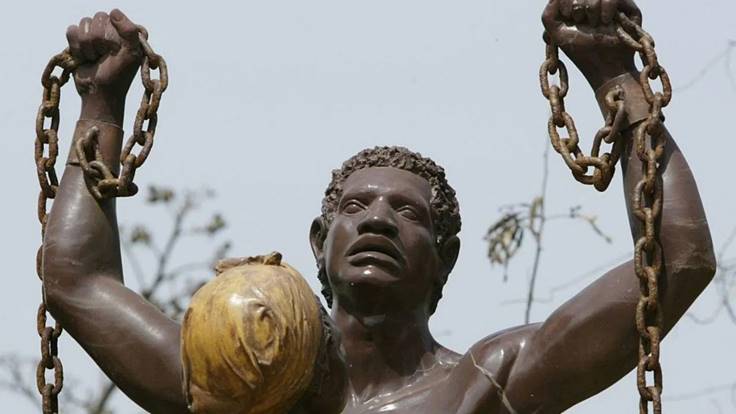
The recent recognition by the United Nations of the Transatlantic Slave Trade as one of the gravest crimes against humanity marks a historic turning point in global moral consciousness. Championed by Ghana, this declaration calls the world not only to remember history but to interpret its meaning and consequences.
For many scholars, activists, and theologians, the history of slavery is not only political or economic, but it is also deeply spiritual. When viewed through the lens of Deuteronomy 28, the global experience of African enslavement takes on an added dimension: that of covenant, consequence, and eventual restoration.
Ghana’s Proposal: A Call to Global Accountability
Ghana’s advocacy at the United Nations rests on three enduring truths:
- The Transatlantic Slave Trade represents one of the largest forced displacements in human history
- Its economic benefits enriched empires while devastating African societies
- Its legacy continues to shape inequality, identity, and justice movements worldwide
By elevating this history to the level of a crime against humanity, Ghana has reframed slavery not as a closed chapter, but as an open moral ledger.
Deuteronomy 28: A Prophetic Framework of Displacement
Within Deuteronomy 28, a series of consequences are outlined for a people who fall into disobedience. Among the most striking passages are those describing captivity, displacement, and systemic suffering:
- A people being removed from their homeland
- Scattering across nations
- Enslavement under foreign powers
- Generational hardship and oppression
For many interpreters, these descriptions resonate deeply with the historical experience of Africans during both the trans-Saharan and transatlantic slave trades.
In particular, the notion of being carried “into Egypt again with ships” (often interpreted symbolically as a return to bondage) has been connected by some to the mass maritime transport of enslaved Africans across the Atlantic.
Historical Continuum: From Arab to Transatlantic Systems
Africa’s encounter with large-scale enslavement unfolded across multiple phases.
The Arab slave trade represents one of the earliest sustained systems of human trafficking affecting the continent. Operating across North Africa, the Middle East, and Asia for over a fourteen centuries, it involved the movement of millions of Africans through trans-Saharan and Indian Ocean networks.
From this perspective:
- Arab traders are often identified as among the earliest organizers of long-distance, systematized African human trafficking
- This system predated and, in some respects, influenced later European expansion into slave trading networks
European powers, the ten kingdoms controlled by the Roman Catholic church in the middle-ages, viz: Spain, Portugal, France, UK, Germany, Italy, Netherlands, Sweeden, Norway/Denmark and Belgium, would later expand and industrialize this system into the Transatlantic Slave Trade, transforming it into a global economic engine built on racialized chattel slavery. These are also the nations who carved up and colonise Africa in 1884-5 at the Berlin conference.
Importantly, while the Transatlantic Slave Trade was abolished in the 19th century, forms of slavery and servitude persisted longer in parts of the Arab world. In countries such as Mauritania, slavery was only formally criminalized in 2007, making it one of the last places where legal abolition occurred.
Theological Chronology and the “Times of Distress”
‘There will be great suffering such as not been seen from the beginning of the world until now, no and never will be,’ Matthew 24:21.
Some theological interpretations place this long history within a prophetic timeline.
They associate the emergence of extended systems of enslavement, including the Arab slave trade with the construction of the Dome of the Rock Mosque in Jerusalem between 685 and 692 CE.

In this framework:
- The structure is interpreted as the “abomination that causes desolation” referenced in the Olivet Discourse as recorded in Matthew 24:15-22ff.
- This marks the beginning of a prolonged era of global distress and upheaval, also termed ‘the times of tribulations, 1335 years.’
- Systems of slavery are seen as manifestations of this prophetic period
- The eventual abolition of slavery as late as 2007 in Mauritania is viewed as part of a long arc of prophetic fulfilment connected to Book of Daniel, including 12:12 [1335 years viz: 2007-692]
Scholarly Considerations and Historical Balance
For a responsible and publishable account, it is important to maintain clarity:
- European Historians do not universally agree that the Arab slave trade directly caused the Transatlantic system, though there were interactions and precedents
- Hence, the claim that Arabs were the first and last in the timeline of slavery reflects a particular interpretive perspective rather than a universally accepted academic conclusion
- Biblical prophetic interpretations vary widely and are understood differently across traditions
Thus, while these perspectives provide powerful interpretive meaning, they should be presented alongside established historical scholarship.
Why This Recognition Matters Today
The United Nations’ declaration builds on earlier efforts such as the Durban Declaration and Programme of Action, reinforcing a global commitment to truth.
Its significance includes:
- Moral acknowledgment of historical injustice
- Educational correction of distorted narratives
- Legal and political grounding for reparative justice
For many, it also represents a moment of prophetic awakening, a shift from curse toward consciousness.
Conclusion: From Curse to Restoration
When read through the lens of Deuteronomy 28, the history of slavery can be seen not only as a human tragedy, but as part of a larger narrative arc, one that moves from disobedience and suffering toward recognition and, ultimately, restoration.
Ghana’s leadership in this moment signals more than political advocacy. It represents a reclaiming of history, identity, and moral voice.
The task ahead is clear:
- To move from recognition to repair
- From historical awareness to justice
- From inherited trauma to collective restoration
In this journey, the world is not only confronting its past it is redefining its future.
 Pastor Bell's Words To Live By
Leave a comment