by Alton P. Bell
This presentation interrogates the theological legitimacy of priestly and clerical vestments by tracing their development from the Aaronic priesthood of ancient Israel, through their corruption during the monarchic and Second Temple periods, to their post-biblical reconstruction within Roman Catholicism. Employing a canonical-historical method combined with decolonial theological critique, the study argues that religious attire was originally functional and provisional, became ideologically corrupted as a marker of power and hierarchy, was decisively repudiated in the ministry of Jesus, and was theologically abolished in New Testament ecclesiology. The later development of Catholic clerical attire is shown to arise not from biblical continuity but from Roman imperial culture and medieval class stratification, later functioning as a visual technology of colonial domination. The paper concludes that the continued use of clerical dress—particularly in post-colonial contexts—constitutes a theologically indefensible re-sacralisation of hierarchy that contradicts both the Christ event and the ethical vision of the gospel.[1]
Introduction
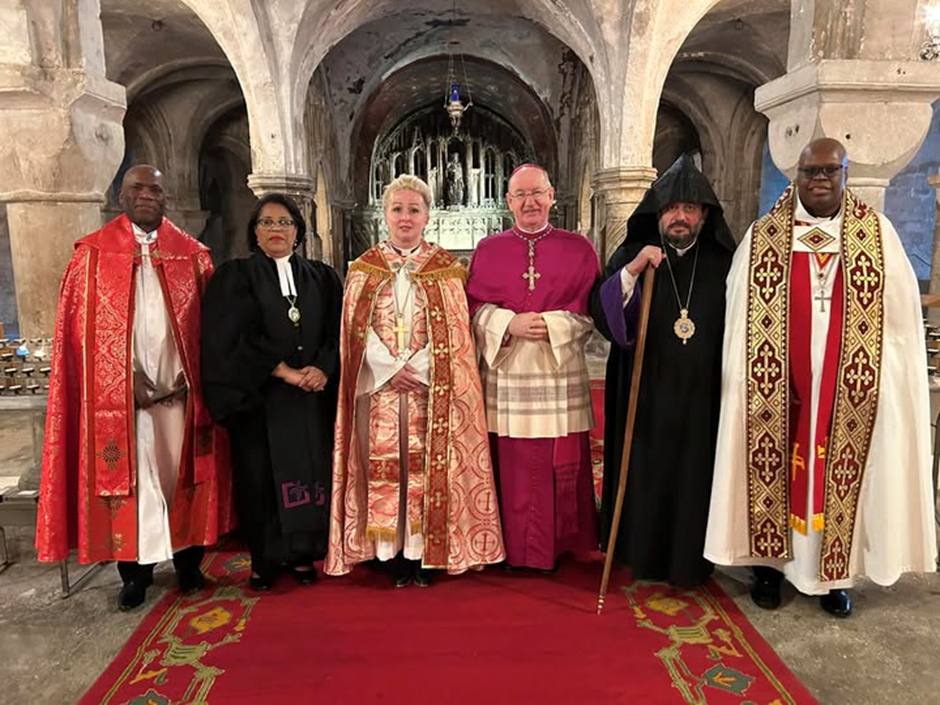
Religious vestments occupy a powerful symbolic role within institutional Christianity, especially within Roman Catholicism, where clerical attire functions as a visible signifier of sacred authority, ecclesial continuity, and ministerial legitimacy. These garments—chasubles, stoles, cassocks, mitres, and collars—are often defended as expressions of reverence and historical rootedness. Yet such claims warrant rigorous theological scrutiny, particularly when evaluated against the witness of Scripture and the historical development of Christian praxis.[2]
This paper contends that clerical attire represents not a faithful inheritance of biblical priesthood but a post–New Testament reconstruction of religious authority shaped decisively by Roman imperial culture and later weaponised through European colonial expansion. The study advances three primary claims: (1) priestly vestments in the Hebrew Bible were functional, covenant-specific, and temporally limited; (2) the prophetic tradition and Jesus of Nazareth expose and condemn the ideological misuse of religious dress as a marker of power and spiritual superiority; and (3) Catholic clerical attire emerges historically from imperial and aristocratic contexts rather than apostolic theology, functioning as a visual grammar of domination rather than servanthood
Decolonised re-reading of Matthew chapter 23
Then Jesus said to the crowds and to his disciples, 2 “The Jesuits and the colonial and reformed Christian leaders sit on the early church father’s seat; 3 therefore, do whatever they teach you and follow it, but do not do as they do, for they do not practice what they teach. 4 They tie up heavy burdens, hard to bear, and lay them on the shoulders of others, but they themselves are unwilling to lift a finger to move them. 5 They do all their deeds to be seen by others, for they make their chasubles, cassocks frocks broad and their stoles long. 6 They love to have the place of honour at banquets and the best seats in the churchesand to be greeted with respect in the marketplaces and to have people call them reverend.[3] 8 But you are not to be called reverend, for you have one teacher, and you are all brothers and sisters. 9 And call no one your Father[4] on earth, for you have one Father, the one in heaven. 10 Nor are you to be called instructors, for you have one instructor, the Messiah. The greatest among you will be your servant. 12 All who exalt themselves will be humbled, and all who humble themselves will be exalted.
13 “But woe to you, colonial apologists and pseudo reformers, hypocrites! For you lock people out of the kingdom of heaven. For you do not go in yourselves, and when others are going in you stop them.[c] 15 Woe to you, colonial apologists and pseudo reformers, hypocrites! For you cross sea and land to make a single convert, and you make the new convert twice as much a child of hell[d] as yourselves.
16 “Woe to you, blind guides who say, ‘Whoever swears by the sanctuary is bound by nothing, but whoever swears by the gold of the sanctuary is bound by the oath.’ 17 You blind fools! For which is greater, the gold or the sanctuary that has made the gold sacred? 18 And you say, ‘Whoever swears by the altar is bound by nothing, but whoever swears by the gift that is on the altar is bound by the oath.’ 19 How blind you are! For which is greater, the gift or the altar that makes the gift sacred? 20 So whoever swears by the altar swears by it and by everything on it, 21 and whoever swears by the sanctuary swears by it and by the one who dwells in it, 22 and whoever swears by heaven swears by the throne of God and by the one who is seated upon it.
23 “Woe to you, colonial apologists and pseudo reformers, hypocrites! For you devise animal, feminist, liberal, black, gay and lesbian theologies and have neglected the weightier matters of the law: justice and mercy and faith. It is these you ought to have practiced without neglecting the others and justifying the enslavement of your African fellow human beings.You blind guides! You strain out a gnat but swallow a camel!
25 “Woe to you, colonial apologists and pseudo reformers, hypocrites! For you clean the outside of the cup and of the plate, but inside they are full of greed and self-indulgence. 26 You blind colonialists! First clean the inside of the cup and of the plate, so that the outside also may become clean.
27 “Woe to you, colonial apologists and pseudo reformers, hypocrites! For you are like whitewashed tombs, which on the outside look beautiful but inside are full of the bones of the dead and of all kinds of uncleanness. 28 So you also on the outside look righteous to others, but inside you are full of hypocrisy and lawlessness.
29 “Woe to you, colonial apologists and pseudo reformers, hypocrites! For you build the tombs of the prophets and decorate the graves of the righteous, 30 and you say, ‘If we had lived in the days of our ancestors, we would not have taken part with them in shedding the blood of the prophets.’ 31 Thus you testify against yourselves that you are descendants of those who murdered the prophets. 32 Fill up, then, the measure of your ancestors. 33 You snakes, you brood of vipers! How can you escape the judgment of hell?For this reason I send you prophets, sages, and scribes, some of whom you will kill and crucify, and some you will flog in your churches and pursue from town to town, 35 so that upon you may come all the righteous blood shed on earth, from the blood of righteous Abel to the blood of Zechariah son of Barachiah, whom you murdered between the sanctuary and the altar. 36 Truly I tell you, all this will come upon this generation.
The Lament over Jerusalem
37 “Jerusalem, Jerusalem, the city that kills the prophets and stones those who are sent to it! How often have I desired to gather your children together as a hen gathers her brood under her wings, and you were not willing! 38 See, your house is left to you, desolate.[g] 39 For I tell you, you will not see me again until you say, ‘Blessed is the one who comes in the name of the Lord.
[1] N. T. Wright, The Day the Revolution Began (New York: HarperOne, 2016).
[2] James F. White, Introduction to Christian Worship (Nashville: Abingdon, 2000).
[3] The title Reverend is only mentioned once in the Bible, in Psalm 111:9 and refers to Yahweh who redeemed his people.
[4] The Roman Catholic church uses this title for their priest interchangeably with the title Reverend.
 Pastor Bell's Words To Live By
Leave a comment