By Alton P Bell March 2026
Introduction
Did you know that you are a gift to the body of Christ, to serve his people not to rule over them?
Colonisation has profoundly shaped not only political and economic systems, but also the way many followers of Jesus understand leadership, authority, and identity within the church. One of its most subtle yet damaging effects has been the introduction of hierarchical structures that mirror European colonial systems. These structures often distort the biblical vision of the church, replacing a community of mutual service with a ladder of status and power. In doing so, they obscure the radical, servant-centred model of leadership that Jesus embodied and taught.
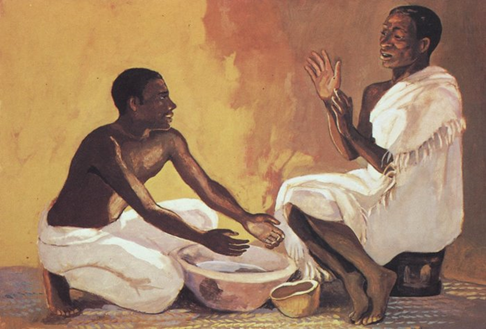
In Ephesians 4, the apostle Paul presents a vision of the church in which apostles, prophets, evangelists, pastors, and teachers are given as gifts to the church by Jesus Christ himself. These roles are not ranks in a hierarchy, but functions that serve the unity and maturity of the whole community. Each office is equally valuable, and none is elevated above the others in status. However, under the influence of colonial thinking, these roles have often been reinterpreted as positions to aspire to—steps on a ladder rather than expressions of service. This shift reflects not the kingdom of God, but the power structures of empire.
Greatness is in service not by ruling!
Jesus himself explicitly rejected such hierarchical models of leadership. He taught that greatness in the kingdom is defined not by authority over others, but by service to them. Leaders are called to be servants, not rulers. They are to follow Christ so closely that others can follow them—not because of their status, but because of their Christ-like character. This vision stands in stark contrast to systems that elevate leaders above the people, granting them privilege, control, and symbolic markers of superiority.
One of the visible remnants of colonial influence in the church is the use of clerical garments—collars, stoles, long robes, or attire resembling Roman or European ecclesiastical dress. While these garments are often seen as symbols of holiness or office, they can unintentionally reinforce ideas of separation and superiority. Yet Jesus, in fulfilling the vision of the suffering servant in Isaiah 53, did not clothe himself in garments of status. Instead, he identified with humility, suffering, and service. His life was a rejection of outward displays of religious prestige.
Furthermore, in Matthew 23, Jesus sharply rebukes religious leaders who use clothing and public recognition to elevate themselves. He condemns those who love to be seen, who seek honour through outward appearance, and who burden others while exalting themselves. His words challenge any expression of faith that prioritizes image over substance, or status over service.
When we call the church to repentance and to decolonise, we will often be labelled “mad,” echoing the experience of prophets like Jeremiah. Throughout history, those who challenge entrenched systems—especially religious ones—are often dismissed or misunderstood. Yet prophetic voices are essential for calling God’s people back to truth.
Conclusion
To decolonise is to strip away the layers of cultural and historical distortion that have obscured the gospel. It is to reject the idea that holiness is demonstrated through external symbols, titles, or garments. Instead, believers are called to “clothe” themselves with Christ-like virtues—love, patience, kindness, gentleness, and long-suffering. These are the true marks of spiritual maturity and leadership. This is the mandate of the church: not to replicate systems of power, but to embody the character of Christ. Leadership must be reimagined as service. Authority must be expressed through humility. Identity must be rooted not in outward appearance, but in inward transformation. As the church embraces this calling, it moves closer to the vision of the kingdom of God—a community where all serve, all grow, and Christ alone is exalted.
 Pastor Bell's Words To Live By
Leave a comment